Killing time with speculation

One of the worst things about languishing in the purgatory of endlessly waiting for playoff games the Vancouver Whitecaps aren’t even involved in is the almost complete lack of any concrete news around the club.

And yet even in this barren wasteland of information there have been at least two possible transfer rumours alluding to a player heading to Vancouver (well maybe one and a half, or maybe just one, perhaps half a rumour at best).

Thankfully we are now living in a post-truth world so we can all pretty much speculate to our hearts content.

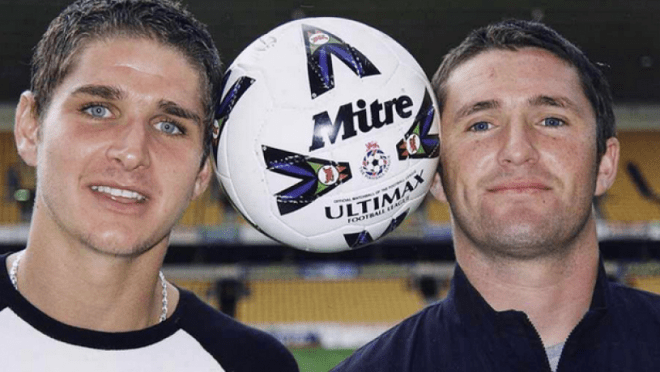
The most concrete (ish) rumour surrounds Robbie Keane

There are a few good reasons why Keane could come to the Whitecaps.

He and Carl Robinson became firm friends at Wolverhampton Wanderers when a freak training ground accident forced them to undergo a rarely attempted surgical procedure

robbokeane_620

And both players were said to be hugely relieved when the term “ballectomy” was fully explained to them.

Keane is a proven goalscorer in MLS and is the kind of experienced striker that Robinson has favoured in recent seasons.

Yet against all that stands the Irishman’s much professed hatred of turf and the fact that his salary would surely make him a no go if he was going to be used in the same manner as Earnshaw and Perez.

Robinson has a strange compulsion to sign players based on their impact on the locker room as much as the pitch but Keane would surely be a step too far in that direction.

So Keane to the Whitecaps? It’s less than likely.

The other rumour that swirled around social media recently was caused by this tweet

The LA Galaxy’s Emmanuel Boateng fits the Whitecaps model almost as much as Robbie Keane does.

He’s a quick wide player who doesn’t finish quite as well as he should but the Whitecaps have enough of those to be going on with unless there’s a trade involved somewhere.

The tweet was almost certainly a post-Trump joke rather than a declaration of intent but let’s run this idea passed the space-time continuum and see who tries to kill Hitler.

In 2017 Kekuta Manneh should be eligible for the US National Team and let’s assume he gets selected by whoever happens to be in charge at the time and then let’s further assume he has one of those games where he ends a couple of those runs of his with a goal.

Suddenly there’s a new young superstar on the US team and if there’s one thing the MLS media love it’s an exciting young American player and if there’s one thing that marketing departments of teams love it’s a player who gets media coverage.

To cut a long story short there’s a possibility that Manneh could be the Whitecaps hottest property by some distance next season.

Would MLS love to have such a player on an American team? Sure. Would they be prepared to give the Whitecaps something substantial in return? Sure.

Obviously I’m using “substantial” in the MLS sense of “completely imaginary  money” but it’s real if you think it’s real.

So Boateng to the Whitecaps? No, unless somewhere down the line the planets align to make the Galaxy yearn for the marketing muscle of Manneh.

Stranger things are happening every day.

Whitecaps Staring into the Infinite

This is a fairly fascinating article examining how the way we view Deep Time has changed over the years which I will now summarise by means of a limerick.

We used to think time was immense

Compared to our own present tense

But now we perceive

That the data we leave

Makes us immortal (in a sense)

In other words the mid-twentieth century perception of humanity occupying an essentially ephemeral period within the “life” of the earth has given way to the acknowledgment that almost everything we do (from fuel usage to the enormous amounts of data we accumulate) will have effects on the world for eons to come no matter whether we as a species are still around or not.

But it certainly doesn’t feel as though we are living in a Deep Time era. Not when every breaking news story swings an election one way or the other and it certainly doesn’t feel that way when it comers to sports either.

Coaches are judged by a measurement of games rather than seasons and games are judged by a measurement of individual results rather than performance or progress.

So with that in mind the first round of the MLS playoffs could not have gone any worse for fans of the Whitecaps and, by extension, the people who hold the purse strings of the club.

The big spending LA Galaxy beat the less big spending Colorado Rapids, the very big spending Toronto FC beat the very big spending NYCFC, the big spending Montreal Impact beat the not big spending New York Red Bulls and the very big spending Seattle Sounders but the not big spending FC Dallas.

There may still be a second game to play in each of these contests but the instant narrative to be gleaned from all this is that spending money equals success in the post-season.

And that goes directly in contradiction to how the Whitecaps Front Office have spun their reaction to the disappointing 2016 season with the Rapids, Dallas and Portland being held up as examples of how to succeed in MLS without breaking the bank.

If things do turn around in the second leg then that line of defence may still hold some water but if Seattle, LA, Montreal and Toronto make it through (Two fellow Canadian teams, a Cascadian rival and the very incarnation of the MLS big name DP strategy) then the off-season will definitely be more uncomfortable in terms of PR initiatives.

None of this means the Front Office are necessarily wrong of course; taking such a small sample size to extrapolate a fully formed theory is foolhardy at best.

But narrative is such a powerful decider in sport that anything which contributes to that narrative is automatically imbued with an authority no matter what the merit.

My own take is that the people who have been less than successful at recruiting mid-range DPs probably shouldn’t be handed the keys to the safe and told to go out there to get whoever they want no matter what the price and that one badly thought through expensive signing could do more damage to the team (in any number of ways) than three badly recruited mid-range signings.

But the trajectory of the post-season is making that big name acquisition look more and more like the wise (and maybe even necessary) business move.

That article I cited ends with the words “we are conjuring ourselves as ghosts that will haunt the very deep future” which I think is meant to be heavy with portent but which I find oddly reassuring for some reason.

Let’s just hope that whoever the Whitecaps do sign in the next few months won’t come back to haunt them for years to come (Memo to self: Well done at finding a link back to the article. Genuinely didn’t think you could do it).

Vancouver Whitecaps: Every day in every way…

Now that Whitecaps fans are living in that bitter spot of time between the end of the MLS playoffs and the confirmation of any actual moves in and out of the club this is a good opportunity to step away from the usual ruthlessly analytical examination of tactics and team selection and take a more panoramic view of how the club could make small (but significant) changes for the better in 2017.

So we’ll run these three ideas up the proverbial flag pole and see who metaphorically salutes.

Always play in white for home games- They are called the Whitecaps, the play “White is the Colour” before every game and yet frequently turn up varying shades of blue.

Now I get it’s about marketing alternate jerseys and I’m definitely not in the “Against Modern Football” camp (Football is a simple game that is exceptionally good at imbuing itself with whatever the quirks and ills of society currently are. So I guess I’m “Against Modern Football” but throughout all periods of time because there have always been things about football to be “against” no matter what the era).

Anyway, now that we’ve muddied that puddle of water back to the “always play in white at home” issue.

Aside from the ridiculous spectacle of the Seattle Sounders playing in white at BC Place a few weeks ago (there must have been a few newbies who thought that Seattle were the home team on that day) it seems odd to not want to establish a consistent identity at home.

You could even call it “strengthening the brand” for those more interested in the marketing aspect of the whole thing but try to imagine Real Madrid allowing an opponent to turn out in a white kit at the Bernabeu?

Or Manchester United permitting an opponent to play in red?

The Whitecaps are nowhere near that level but team colours are an integral part of how people relate to a club and the Whitecaps currently play far too fast and loose with that emotion.

WhitecapsFC TV- Sure the Whitecaps aren’t going to get a subscription channel in the way that Barcelona and Chelsea do but there must be a sweet spot somewhere between what we got through regular TV and what we get on the Whitecaps own site.

Unfortunately MLS is particularly poorly served when it comes to game analysis. The TV time slots allow for almost none and the official MLS home page revels in three minute videos that are more enamoured with camera angles and slow motion than they are with details.

So how great would it be to have a weekly show of about an hour where a coach broke down a play or a player talked through his movement leading up to a goal?

It would be very great that’s the answer!

It happens in every other North American sport yet for some reason soccer seems to feels it’s audience is comprised solely of people for whom the average cat GIF is a little too much to ask in terms of attention span.

And if nobody else within the media is willing to offer MLS fans a level of respect when it comes to covering the game then the Whitecaps could and should go there.

Let’s play two- Arguably the most successful aspect of 2016 was Whitecaps FC 2, but being stuck out at UBC means they tend to exist more in theory than in practice to most people.

The Whitecaps did well in spreading that location this year but playing a couple of games a year at BC Place before a first team game would not only be a great experience for the second string it would also instil their existence in the minds of the few thousand who would arrive early to see them play.

Any salutes from any of those flagpoles?

No? Well what about each team having the opportunity to throw a dog on to the field once in each half?

Too gimmicky?

Whitecaps extend Carl Robinson’s tenure

The news that Carl Robinson has signed a new contract with the Whitecaps through 2020 is both a huge vote of confidence in him from the Front Office and an attempt to imbue some stability at the club.

But stability isn’t the be all and end all of what a team should be; there has to be progress too and that was the missing element this year for the Whitecaps.

So if Carl Robinson were to give me a call and say “Russell, I need five bullet points on how to to improve in 2017. Can you help me?” I would say “Hey Carl! No I most definitely can’t because I’m an idiot but that’s a great idea for a really simple blog piece. Thanks!”.

And so we leave the coach staring disconsolately at his phone while we list five hastily thought through areas of possible development for the man in charge.

  • Better targeted signings– In other words bringing in players who fit a specific system rather than bringing in players just because they are “good”. File Kudo in that category and maybe even Perez too. Robinson probably got lucky with his early moves and unlucky with his later ones but finding pieces for the gaps rather than pieces that need a gap creating for them has to be the priority now.
  • Better in game management- Did I say “better”? Maybe I meant “braver”? Because there’s definitely a cautious side to Robinson that while having some advantages frequently limits his ability to change a game. Make an early substitution every now and then if only to keep the Whitecaps players on their toes. Change things around at half time if they aren’t going well. More active touchline coaching wouldn’t go amiss either but that’s probably my personal preference over anything of any actual value.
  • Don’t always be defence counsel for the players- It’s fine to speak up for the team but not to the extent that stretches the bounds of credibility. Don’t say they played well when we all know they didn’t, don’t praise their character immediately after they’ve thrown away another three points. That’s also a good way to let the fans know that you are aware of the issues and are addressing them.
  • Select the right captain– We can argue all day whether who the captain is really matters on the field but it does matter off it. Pedro Morales was never willing or able to give any kind of lengthy post game analysis and so it was left to others (I’m looking at you David Ousted) to step up to the plate. Could it also be that Pedro’s unwillingness to fulfill all the aspects of the role led to dissatisfaction among other players (I’m looking at you David Ousted)? Hard to say. But I’m betting it didn’t help.
  • Embrace the hate- Or at least don’t be afraid to piss a few players off no matter what their salary or standing. This is related to point three I suppose but that toning down of public support when necessary needs to be aligned with ruthlessness in private. This season essentially proved that Robinson can’t trust all his players to either manage their own fitness or their own internal esprit de corps. Time to eschew the velvet glove for the iron fist.

Contract extension or no contract extension it’s hard to see Robinson surviving another season as bad as 2016 (in terms of performances if not results) so how he implements the lessons he says he has learned will essentially define how he is perceived as a coach.

Beyond the good news of the new contract that’s an awfully daunting situation to be in.

Vancouver Whitecaps end the season on a high

The Vancouver Whitecaps game against the Portland Timbers on Sunday afternoon at BC Place felt a bit like the last day of a particularly disappointing vacation.

That day trip to the historic village? Tourist trap full of tourist tat. That fish restaurant everybody recommended? Food poisoning. That cruise around the charming harbour? Thirty minutes on a barely renovated car ferry.

Yet on the last day of the whole vacation you not only stumble across the best beach party ever but you also finally get some “quality time” with that guy/gal you’ve been helplessly staring at for the last seven days.

Okay, the Whitecaps 4-1 win over the Portland Timbers wasn’t quite that good but it did at least ease away a little bit of the pain of all that had gone before.

And that easing of pain was helped even more thanks to four of the best goals of the season; a left foot rocket and a right foot pass into the net from Giles Barnes, a howitzer from Pedro Morales and a twisting run from Nicolas Mezquida.

A churl would say that the Timbers (who haven’t won on the road all year) just weren’t very good, but Vancouver have managed to lose to not very good teams all season.

That same churl would also say that being able to produce your best performance when there was nothing of any significance on the line was actually a sign of weakness rather than strength.

But the Cascadia Cup and a little bit of pride were on the line and the trick for Carl Robinson and his coaching staff is to learn the right lessons from the game and not the wrong ones (and if there were an end of season award for stating the obvious then that sentence would easily sweep all before it).

The wrong lesson to be learned is that there are no fundamental issues with this team that can’t be fixed with a small attitude adjustment and a little bit of luck.

The issues run far deeper than that.

The right lesson to be learned is that playing a lone striker can work if the lone striker works as hard as Erik Hurtado (but with a better end product) and if each one of the three behind him is constantly willing to offer support when the ball goes forward.

It also doesn’t hurt to actively try to add to a lead rather than to hope one goal will always be enough.

But there’ll be time enough in the coming weeks and months to delve into what needs to change (a lot) and who needs to leave (a few) because today we can all sit back and relax as our metaphorical plane takes off from our metaphorical runway and our metaphorical whimper of  a vacation comes to an end with an unexpected metaphorical bang.

But seriously let’s never go back to that place again.

Time for the Soccer Shorts player ratings

Ousted-6, Aird-7, Waston-6, Parker-6, Harvey-6, Laba-6, Morales-7, Bolaños 7, Mezquida-7, Hurtado-6, Barnes-7*


Vancouver Whitecaps Season Review: Part Three

Here’s a tip for you.

If you’re ever unlucky enough to face the death penalty but lucky enough to choose your own mode of execution then make sure you opt for death by a firing squad comprised solely of Vancouver Whitecaps strikers.

You’ll probably live for another fifty years.

I’m joking of course (you’d last five years maximum) but I’m using humour to slam home the point that the Whitecaps weren’t very good going forward this season.

But that’s not necessarily the fault of the men playing nearest to the opposition goal (though it is partially their fault) because the system that Vancouver play does about as good a job as it can do of setting them up to fail.

The season began with Octavio Rivero back in his world of perfect isolation and when he threw down his tools and headed to the land of Colo Colo it was pretty much a case of “striker by committee” from that point on.

Erik Hurtado got the nod for most of the games and he did what he always does; hustled well, got into good posiitons and then mostly made no use whatsoever of said position.

It’s clear that Carl Robinson admires Hurtado’s workrate but no team is going to achieve consistent success with Hurtado as the lone striker.

Ah the “lone striker”; that most beloved of all Carl Robinson’s tactical ploys.

The problem with that being the team just don’t have anybody who can play that role with any degree of substance.

Blas Perez maybe could have done a couple of years ago but now he needs somebody near him and anyway he’s mostly been consigned to the Rober Earnshaw school of “signing  an experienced and proven goalscorer and then mostly leaving him on the bench”.

Nicolas Mezquida certainly can’t play that role, although the few times he started as a number ten he at least provided some kind of support when the Whitecaps were going forward.

And as for Masato Kudo?

If any signing summed up the issues with the current team then it’s the unfortunate Japanese striker.

Even leaving aside his horrific injury it soon became clear that if he was going to make it in MLS (and that’s a fairly big “if”) he’d need somebody to play alongside him.

But his chances of playing the solitary front man role were zero.

Either the Whitecaps signed Kudo  without giving any consideration to how he would fit into the team or they signed him with the intention of adapting their style of play and then swiftly abandoned any such plan.

If there has to be one guiding principle for the team to follow in the coming months then it surely has to be attempting to bring in players who genuinely fit whatever system Carl Robinson favours in 2017.

Don’t pick the players they want, pick the players they need.

Giles Barnes arrived as a kind of second prize in the mid-season lottery and proceeded to play like the fifth prize in the mid-season lottery and so now the decision to be made is to judge whether his inability to shine was down to him or the broken nature of the team.

But signing him for another year would be a huge, season defining, gamble.

The only person who came out of all this with any positives is Kekuta Manneh (mostly because  he stopped playing due to injury).

Bizarrely Manneh never quite looked right from the very start of the season but even more bizarrely he was still greatly missed once he was no longer available.

Having Manneh back next year will be a bonus but the problem is that he tends to cover up deficincies within the rest of the team (both technical and tactical) because having a player who can run very quickly with the ball is still a pretty effective weapon to hold in MLS.

So figuring out how to get a good finisher and then how to get that good finisher into postions where he can actually finish has to be priority number one for the Whitecaps right now.

The problem though is that isn’t an easy task and it’s exacerbated by the knowledge that the track record in that department is borderline abysmal.

But the law of averages has to kick in at some time I guess?


Vancouver Whitecaps play a game of soccer in San Jose

There are two ways of looking at the Vancouver Whitecaps 0-0 tie with the San Jose Earthquakes on Sunday afternoon.

It was either a meaningless end of season game which meant nothing to either team and so drifted predictably into nothingness or, alternatively, it was a fascinating insight into the mind of Carl Robinson has he prepares for 2017.

If you think the former then stop reading now (and that is the course of action I strongly recommend) but if you think the latter then please follow me deep into the the rabbit hole of speculation and supposition.

What was with that starting eleven for example?

No place for any of the late season “playoff push” signings of Edgar, de Jong and Barnes was surely an indication that that particular experiment had failed.

And the decision to play Nicolas Mezquida in the wide left role was one that we can clearly class as “brave” given that Mezquida almost certainly can’t play that position and that he definitely certainly didn’t want to play that position on the day given how often he drifted infield.

And are we back to 4-4-2 as an option again or was that just a way of ensuring that Erik Hurtado can’t be removed from the eleven no matter what the circumstance?

It was nice to see Paolo Tornaghi get a start (and a clean sheet) but how nice was that for David Ousted? This may have been a meaningless game but it was still a competitive game and the Dane is nothing if not a competitor.

And why, all of a sudden, is Fraser Aird back at right back ahead of Jordan Smith? There have been multiple occasions when this change would have made more sense than right now.

And Marco Bustos coming on as a substitute after playing for WFC2 the day before?

Yet none of this does signify anything of course because the Whitecaps season is beyond significance and maybe Robinson was taking this opportunity to throw out a few favours to a few players knowing that such an approach wouldn’t be tolerated in the final game against Portland.

That makes some sense I guess.

Time for the Soccer Shorts player ratings.

Tornaghi-6, Aird-6, Waston-6, Parker-6*, Harvey-6, Laba-6, Jacobson-6, Techera-6, Mezquida-5, Kudo-5, Hurtado-5

Whitecaps Season Review: Part Two

If there is one thing the Vancouver Whitecaps will have learned from the 2016 season (though hopefully they will have learned more than just one) it’s that the margin for error in Major League Soccer is no longer as wide at it once was.

Even the generous playoff format wasn’t enough for the Whitecaps this year and much of that failure stemmed from the poor performance of the midfield (and the defence and the attack).

The middle of the park is supposed to be the engine room for any team but this season it felt less like an engine room and more like a vaguely useful cupboard that is sometimnes used for storage when unexpected visitors stay the night.

In other words the midfield didn’t propel Vancouver forward it merely offered a little bit of space for Uncle Billy to store his suitcase and those golf clubs that we’re all pretty sure he never actually uses.

But even though that generalisation sums up the year with devestating accuracy let’s delve a little bit deeper into the individual performances.

Sometimes it feels as though Carl Robinson’s ideal formation would consist of all ten outfield players playing as deep lying midfielders but even he wasn’t inclined to go that far.

In the end it was only  Laba, Morales, Teibert and Jacobson who spent significant time in the role (with a brief early season cameo from Kianz Froese).

And it was that early season cameo which offered the hope that the Whitecaps were moving away from a duo of defensively positioned central players and incorporating the oft dreamed off “bos to box” midfielder.

The experiment was short lived however as a mixture of suspension, concussion and coaching reluctance effectively removed Froese from the scene.

That left Laba and Morales as the default setting and unfortunately Laba had easily his worst year as a Whitecap.

For much of the first part of the year he was less a terrier chasing after the ball than he was a terrier chasing after where the ball used to be. Maybe he was unnerved by the inconsistent officiating but it took him until the final couple of months of the season to begin to look like his old self again.

Morales started the season with a flurry of penalty goals but that only served to cover up his deficincies and it felt as though Carl Robinson spent the rest of the season frantically trying to find the best formation to cover up those deficincies.

He never found it though and the red card for an unnecessary elbow agasint the Sounders felt like the symbolic last act of his time in Vancouver even if it wasn’t his literal last act.

Andrew Jacobson could make a convincing case that he was the signing of the off season given how competent he was whenever he took the field but it’s exactly that same level of competence that condemns Russell Teibert.

It’s still hard to know what to make of Teibert but he tends to play as though he’s doing the things that he thinks a player in that postion should do.

Drop back to pick up the ball from the central defender, play a safe ball to another central defender and then dart into space to pick up the ball once more before returning it to the first central defender and then rinse and repeat.

Possession hasn’t been lost but neither has anything positive been gained.

It really does feel as though a new start in a new team might make Teibert a more effective and well rounded player.

Christian Bolaños arrived with genuine pedigree; European Champi0ns League and World Cup experience offering the hope he could pair up with Morales to create a genuinely inventive attacking midfield.

That never quite happened (partly down to Morales’ poor form, partly down to the way the team was playing and partly down to Bolaños himself).

The Costa Rican is a technically gifted player who likes to slow the game down playing in a team that (by season end) wasn’t technically gifted and was reliant on getting fast passes to a fast man up front.

In the last game against Seattle Bolaños played in the number ten role and there were signs that he could fit that position effectively. indeed, a platoon of Bolaños and Mezquida playing in that most crucial of MLS positions might well allow the Whitecaps to spend money on other areas of the team.

That would be somewhat of a risk to be sure but if Bolaños is to stay then he needs to be in a team that makes the most of his talents rather than stifling them.

Perhaps the most disappointing of all the regular midfielders though was Cristian Techera as the Uruguayan followed last year’s terrific effort with an insipid and inneffective year.

Except in the Champions League of course where he scored goals on a regular basis.

That at least leaves some doubt about whether he’s worth another year as well as leaving even more doubt about why the team didn’t get the best out of him in MLS (or why seemingly every good CONCACAF perfromance he put in was followed up with two or three games back on the bench).

And so we end with Alphonso Davies.

I’m nowhere near the hype train bandwagon (“Hype Train Bandwagon” would be a great name for a band by the way) that many are on, mostly becasue Davies tends to get graded on the curve of his age.

Fire a good chance skywards and he hears ” Oh well. He’s only fifteen you know?”, produce a lovely bit of skill and he hears “And he’s only fifteen!”.

He clearly has immense talent but I’m not sure that playing as an intermittent starter and substitute is the best way to develop that talent over the long term.

I am sure however that it would be madness for the Whitecaps to base next season’s planning on the assumption that Davies will continue to grow (as a player) and so assume that no further upgrade or backup is required in the wide role.

Davies was certainly one of the few “feel good” stories for the club in 2016 but let’s hope that isn’t the driving force with regard to how his career develops.

So let’s leave the midfield there; hastily scambling to intercept a fairly average through ball while simultaneously standing statuesque still while the ball is in the opposition penaly area.

Next time out it’s the forwards!

Whitecaps Season Review: Part One

Is it me or are the post season post mortems getting earlier every year?

It is just me because they aren’t, but let’s hope that 2016 is an outlier and that it’s a long time before the Whitecaps season is over again with still two games of the regular season to play.

But a season that leaves us all wounded does at least give us the chance to constantly pick over the scars of that wound until it just won’t stop bleeding (and that’s a good thing right?).

So time for the first part of the Soccer Shorts Season Review which looks at the defence.

Just to note that I won’t be looking at the financial impact of each player because

a) I can’t be bothered to delve into the deliberately opaque intricacies of the MLS rules

and

b) The moment I see more than one number in a paragraph I immediately revert to my high school math(s) self and feel an uncontrollable urge to carve obscure band names into the nearest wooden surface.

Let’s kick off part one with a look at the defence.

That should probably have read “defence” though given how poor it was this year with almost every major player guilty of one or more egregious errors.

But there comes a time when so many individual errors add up to a collective problem.

Organization? Preparation? Collaboration? Afforestation? Hard to say for sure but it definitely seems to have ended in “tion” and it’s one of the major areas that needs to be addressed in the off season (the others being the midfield and the forward line).

So how did it go position by position?

Goalkeeper- David Ousted had a mixed year alternating between brilliant saves and inexplicable errors but is still considered the de facto number one and is almost worth that designation for his willingness to call out the team when it plays badly (a trait he had to employ on far too many occasions this year)

Paolo Tornaghi is almost the Platonic Ideal of a backup keeper; content to sit enthusiastically on the sidelines and capable of competence when called into action.

The biggest shadow hanging over this position though is Spencer Richey.

The twenty-four year old has done well for WFC2 this year and has looked more than comfortable when called up to the CONCACAF Champion’s League.

If (and it’s a huge and almost impossible to imagine “if’) the Whitecaps did feel they needed to offload Ousted then Richey offers a tantalizing replacement option.

In many ways it would be a disappointment if he wasn’t the number one keeper in 2018.

Right back- Other wise known as the “Yikes! What was he doing there!” position.

The role has essentially been switched between Jordan Smith and Fraser Aird for the majority of the season and it’s been an exercise in hope over expectation for much of that time.

Except that, as the season wore on, Smith wasn’t that terrible.

He still got caught out of position too often and his ability to get forward was mitigated by his inability to hit a genuinely dangerous cross and also the phrase “wasn’t that terrible” isn’t going on anybody’s résumé.

But for all that I’m not sure Smith made many more mess ups than many of his colleagues and having Bolaños in front of you is hardly a recipe for solid defensive cover.

As for Fraser Aird it’s hard to say if he flattered to deceive or deceived to flatter as the season wore on but it was a curiously stop/start campaign for the Canadian youngster.

He definitely looked better in a more forward role where his pace probably wasn’t used as effectively as it might have been and it will be interesting to see how he develops if given another year with the team.

In summary, if Vancouver can find a better right back (and they probably can) they should sign him but a combination of Smith and Aird is something that can just about be lived with.

A ringing endorsement if ever there was one!

Central defence- This was, without doubt, the Whitecaps strongest area in 2015. So imagine our surprise when it turned out to be the weakest in 2016.

The previously solid partnership of Kendall Waston and Tim Parker melted into a formless gloop of nothingness and the arrival of David Edgar merely served to preserve the formless gloop but with more shouting.

There’s a huge decision to be made about this position in the coming weeks and months.

It seems as though Edgar is here to stay (partly due to said “shouting”) and that leaves one of Parker and Waston out of the loop (and out of the gloop as well I guess).

Both will want to be playing regularly and both have some kind of value as trade bait.

A pairing of Parker and Edgar feels like the right move; an experienced player alongside a quicker youngster.

But the concern is that Carl Robinson will continue to favour Waston over Parker and leave the Whitecaps stuck in the continual hinterland of suspensions and retro-suspensions.

Maybe Parker will decide to stay if that’s the case? But it’s hard to see how that would be good for his overall development.

The back ups for this role are refreshingly competent. Cole Seiler has been steady when called on and hopefully Christian Dean will be ready to go after recovering from injury.

There may be need of extra cover if one of Parker or Waston do leave but Sem de Wit could make the transition from WFC2 (maybe more faith in more WFC2 players might not be a bad mantra for 2017 as a whole?).

Left back- Jordan Harvey hasn’t been perfect this year but he has been far and away the most dependable of the regular defensive core.

Somewhat ironic then that his position may be the most tenuous of all the back line.

The arrival of Marcel de Jong immediately offered a legitimate rival to Harvey and the impressive play of Brett Levis when called up to the first team poses another threat to Harvey (has any Whitecap looked as consistently comfortable on the ball as Levis has this year?).

Similar to the Parker and Waston situation both de Jong and Harvey have some kind of trade value and there really is no right or wrong decision concerning who to let go (obviously we will all call out the decision as right or wrong but there you go).

Harvey offers reliability and experience in MLS and would be a great mentor for Levis and possibly another candidate in the “turning experienced players into coaches” that is clearly a part of the Whitecaps model.

While de Jong is younger, slightly better at getting forward and can also play in Robinson’s much loved defensive midfield role.

Whatever happens if Levis isn’t the starting left back come the tail end of the season then I vow to spend at least one hour a day studying the MLS salary structure.

Next time out it’s the midfield!

Vancouver Whitecaps Player of the Year nominees

It says a lot about how this season has gone for the Vancouver Whitecaps that of the four players nominated for their Player of the Year two aren’t considered as regular starters, one is almost the definition of an MLS journeyman and the other is an international midfielder who has probably under performed relative to his ability.

It says even more about the season that there isn’t one other player in the squad who could seriously be considered for the shortlist. Kekuta Manneh if he had stayed fit perhaps?  But every other possible contender has thrown a howler into the mix for every seeming act of redemption.

But that’s where we are and that’s where we will stay. So let’s break down the four lucky finalists.

Christian Bolaños- Bolaños may not be everybody’s cup of tea (his languid style can often be mistaken for lack of effort) be he leads the team in assists and is joint top scorer of goals from open play (alongside Kekuta Manneh which also says a lot about the season).

More importantly perhaps Bolaños is one of the few players on the team who always wants the ball and is always comfortable with said ball when he receives it.

His acquisition was designed to add the element of guile missing from last season but  we’ve only really seen that guile in glimpses this year.

It’s hard to predict what the Whitecaps will look like next season (although recent signings seem to indicate a move toward pragmatism over playmakers) but if Carl Robinson can find a way to get the best out of Bolaños on a consistent basis he could be a genuine difference maker rather than the fitfully enjoyable player to watch he has been in 2016.

Jordan Harvey– Harvey hasn’t had a perfect season (he was beaten on a couple of crucial back post headers that cost points for example) but compared to the rest of the backline he’s been a model of consistency and calm.

When all around him were losing their heads Harvey carried on carrying on as one of the more reliable left backs in the League.

He’s also matched every Whitecaps central striker for goals scored (two) and is always willing to get forward when given the chance.

More than all that though Harvey always plays as though the game is important to him (which hasn’t necessarily been true of every player this year) and he always plays as though he’s enjoying the fact that he is paid money to do something he loves (which hasn’t necessarily been true of every player this year).

In that way he’s as much a pleasure to watch as many more technically gifted players.

Andrew Jacobson- It’s possible to make the argument that Jacobson has been the Whitecaps best central defender, best defensive midfielder and best box to box midfielder this season.

He may have been acquired for his versatility but the failings of others has meant that versatility has been tested to the nth degree and far more often than Carl Robinson planned for.

In central defence he’s a calming presence, as a defensive midfielder he’s happy to sit and just do the job assigned to him and as the partner to a defensive midfielder he’s willing to get forward far more than any other player (like Harvey he has two goals.

Jacobson can probably feel a little unfortunate not to have received more starts given the solidity of his performances and the fragility of others, but at the very least he’s proven just how valuable he will be to the team in the coming years.

Nicolas Mezquida– It seems as though there’s always a player like Mezquida at every club. A player that the fans think should be starting almost every week but, for whatever reason, the coach just doesn’t quite share the same enthusiasm.

Mezquida may not be a great “number ten” but he’s the best the Whitecaps have by some distance, if only because of his willingness to constantly pressure opposition defenders and his willingness to play in the space that a “number ten” is supposed to play in.

It’s only when Mezquida is on the pitch that it feels as though there is a genuine link between the midfield and the forwards and although he’s not a prolific goal scorer (three this season) and his assist play leaves something to be desired he does at least always make a positive difference when he’s on the field.

Another player who can consider himself unfortunate not to have had more starts.

So who should win?- There really is no right or wrong answer for this one. None of these players have been lights out stellar but each one of them deserves to be on the shortlist.

If I were forced to choose I would just favour Mezquida over Harvey but if you asked me the same question tomorrow I would probably just favour Bolaños over Jacobson and so on and so on.

So just vote for whoever you think should win (probably should have just put that at the start really).