Major League Soccer: Algorithm and Blues

Over the last couple of weeks I’ve been joining in with the “30 Day Music Challenge” (Shout out to Chris Withers for finding it and tweeting it out).

The basic concept is that there is a theme for each day; A Song from 1970’s, A Song That Makes You Happy, A Song about a Pig with the word ‘Kettle’ in the Title (I’m really struggling with that last one to be honest).

It’s partly great because it really challenges you to hone down almost impossibly long lists of songs to just one and it’s partly great because it’s a great way to hear other people’s recommendations that you yourself have never heard before.

And that latter aspect exposes a real problem in how we consume music right now.

If we listen to the radio at all then chances are we listen to a station that plays “our kind” of music and if we rely on streaming then the best hope we have of finding new stuff is via the digital opinion of a soulless algorithm.

“You like Fleetwood Mac? We suggest you try listening to “Fleetwood Mac’s Greatest Hits”. Okay, it might not be quite that bad but you’re never going to be pushed out of your comfort zone in such a scenario.

And that got me thinking. Isn’t the way we consume music kind of analogous to how we also consume sport these days? And isn’t that having an impact on Major League Soccer?

The answer to both question is probably “No” and No” but for the purposes of this post it’s very definitely “Yes” and Yes”. So let me explain.

There are, I think, three kinds of people who don’t watch MLS.

The ones who don’t like soccer at all and they are the ones we can discount until they have their come to Gabriel Jesus moment. But it’s the other two groups who are most interesting.

One don’t watch MLS because they think it’s a terrible league and prefer to stick to the (Usually European) upper echelon league of choice and the others don’t watch MLS because they hate what it is and what it stands for and cling instead to either the hope of a rival league forming or to the friendly surroundings of lower level football.

The former are the musical equivalent of those people who always go to the biggest concerts in town, wear the T-Shirt of whatever supergroup is the flavour of the week and think Coldplay are a little bit too cutting edge.

The only way to get them on board with MLS is to keep making them watch it and the only way to keep making them watch it is to make football far more ubiquitous on our TV Screens.

TSN have recently announced that they will be covering the CONCACAF Champions League from next season, which is great for those of us who regard Facebook as a little bit too much like actually meeting and getting to know other people, but it will only be good for the game overall if TSN step up their coverage to cover more than just the first to the last whistle.

If there’s no sense of occasion to the TV broadcast then those Juventus and Manchester City fans aren’t going to be swayed by anything.

It may amount to being akin to forcing a Mumford and Sons fan to listen to a playlist built around The Dead Kennedy’s ‘Holiday in Cambodia’ but if that’s what it takes then that’s what it takes.

They won’t all climb aboard the bandwagon, but at least some will.

The group who genuinely love local soccer but genuinely hate MLS are a more interesting and trickier conundrum.

Let’s compare these people to early adopter REM fans who never quite forgave the band for going mainstream. Michael Stipe and his cohorts were the Platonic Ideal of a great indy band in their first incarnation; chiming guitars mixed with lyrics that were indecipherable to either the ears or the mind and possessing a front man with genuine charisma.

But, by the time they were being played in every Starbucks, the only people who were actually hurting were those poor saps who thought the band would be their personal secret for the rest of their lives.

So how does MLS get these people back? Well, short of a strict volte face in how the league is run these people aren’t coming back. But that might not be a bad thing in the long run.

How so? You say.

The oft mooted Canadian Premier League finally seems to be gaining some traction and is slated to start toward the end of 2018 and while there are definite signs of nervousness from MLS HQ about this development (Don Garber has recently been seen eating poutine to show how much the League loves their Northern cousins) more football teams can never really be a bad thing.

Not least because rivalry (And especially local rivalry) is the heartbeat of the game.

Imagine if Victoria, or Langley or one of those other places that purportedly exist outside of Metro Vancouver got a CPL team and then knocked the Whitecaps out of the Canadian Championship?

People would be working, going to school, or at least rubbing shoulders with rival fans (PSA: Please ask before you embark on any shoulder rubbing with either a colleague or a stranger). Imagine the banter! Imagine the joy and the sorrow!

If people are going to hate MLS then how much better for them to hate it because they support a rival team rather than because a mid-season rule change introduced yet another new strain of allocation money?

So from now on Don Garber should respond to every question about the CPL by saying “We welcome it because it will give our teams the chance to crush the pathetic minnows every time we play them” (Spoiler Alert: That won’t happen).

And while it’s great that the newly formed TSS FC likes to tweet support for the Whitecaps (And I get that this is a good marketing strategy at this stage of their development) it will be far more enjoyable once they get to the level of disparaging their local rivals (And vice versa).

“Embrace the Hate!” probably won’t fly as a marketing slogan but it’s not a bad unspoken USP.

Hmmm, this all got a bit rambling towards the end didn’t it?

But I have at least solved all of the problems facing MLS with the simple proposition that sometimes forcing people out of their comfort zone is a good way to convince them of the value of something they previously thought valueless.

So let’s end with a song that isn’t a part of my “30 Day Music Challenge” but is at least kind of relevant to this.


Whitecaps v Rapids: What did we learn?

So I was beginning to develop an embryo of a theory which vaguely posited the assertion that Major League Soccer had evolved from one form of creature to another.

Maybe it wasn’t quite a fully fledged invertebrate yet but it had at least emerged coughing and spluttering on to the beach and was definitely beginning to think about using those newly acquired lungs that the persistent sales-octopus had sworn were bound to be the next big thing.

In other words, MLS was developing a very definite hierarchy with a handful of teams pulling away from the rest and the rest being separated into the “mostly looking up the table” or “mostly looking down the table” categories.

Unfortunately actual results have tended to thwart this particular theory and though we can perhaps class Toronto, Dallas and maybe New York City, Kansas and Portland/Orlando as comfortably belonging in the upper echelons the rest of the pack are still fighting for their places in the standings like coked up ferrets in a sack full of white hot rivets

So what was interesting about the Whitecaps win in Colorado was that it was Vancouver who were able to introduce difference makers from the bench with Mezquida and Shea linking up for the winner in addition to the inevitable Alphonso Davies hype fest (HypeFest is like FyreFest but with better catering).

And now that the Whitecaps have announced the signing of Bernie Ibini from the Australian A-League that ability to change the game late on has increased again.

Now, there are two ways of looking at the recent acquisitions of the club.

The first is that they are demonstrating a remarkable lack of imagination in constantly signing players who are essentially hybrid winger/forwards and thus creating a one size fits all approach to tactics that will eventually lead to a dearth of flexibility in the approach to any game.

The other view is that there is a deliberate policy of recruiting exactly the kind of players who can be switched in and out of the team without altering either the shape or flow of the side.

It also provides the opportunity to better recreate what we saw in Colorado; late introductions that can change a game.

Carl Robinson already had this weapon at his disposal to some degree with Manneh and Hurtado but the hope has to be that the recent additions are a step up (in either quality or consistency).

Even then they are probably still over reliant on Fredy Montero to sniff out goals where none seemed to exist and the “there’s definitely a plan to the signings” narrative may be based more on wishful thinking than concrete evidence.

But there’s definitely a plan to the signings!

Vancouver Whitecaps: Road Warriors

Well, well, well.

The four game road trip that many of us thought could be the breaking of the Vancouver Whitecaps season may well turn out to be the making of it.

For the third straight game Carl Robinson trotted out the same starting eleven and the same formation and although the performance wasn’t up to the level of the win in Montreal (or even the defeat in Portland) it was still good enough to beat a very poor Colorado Rapids team by a late Brek Shea goal to nil.

Once again it was heartening to see Robinson introduce attacking substitutions into a veritable stalemate of a game and (from a purely subjective perspective) the more often that change works then the better it is for those of us who watch the team week in and week out.

And it worked particularly well this time around with Nicolas Mezquida setting up the well taken Shea goal with a good crossfield pass.

On the night the standout performers were probably Williams, Waston and Parker with additional nods to Laba and Techera, but we still haven’t seen a great deal from Tony Tchani.

It could be that Tchani is a victim of  NPCBS (New Player Confirmation Bias Syndrome) in which the initial impressions of a player become magnified over the first few games with the result that every time that initial impression is confirmed it becomes embedded deeper into the spectator’s subconscious (I recommend reading Dr. Marta Johansson’s ground breaking paper on NPCBS  “ArsenalFanTV and the Robert Pires Problem- A Thought Experiment” for a genuinely fascinating insight into the phenomenon) but I’m not sure that’s the case with Tchani.

There was though at least one brief spell in the second half where he acted as a kind of midfield wall for the rest of the team to play off that perhaps offered a foreshadowing of his future value to the team but “foreshadowing” isn’t yet a recognized and measurable statistic and it will be interesting to see how the coach fits Tchani into the eleven as other players return to fitness.

What else is there to say?

This was exactly the kind of game the Whitecaps were losing last season and although that change of outcome is as much down to the vagaries of chance as it is to the variation of tactics they already have six points in the bank from a series of games where four would have been perfectly satisfactory.

Building on those points at home is the next big task but first it’s on to Houston and lots of analysis based around the word “problem”.

Time for the Soccer Shorts Player Ratings!

Ousted-6.5, Williams-7*, Waston-7, Parker-7, Harvey-6.5, Laba-7, Techera-6.5, Tchani-5.5, Bolaños-6, Jacobson-6, Montero-6 

Whitecaps v Impact: What did we learn?

Sheesh! Do we have to go through this after every game?

Few things are a more damning indictment of modern culture than the need to “learn” from everything. Can’t we just enjoy the moment for once? Immerse ourselves in the warm glow of three points on the road? Live with the memories for what they both are and were without needing to contextualize them with increasingly shallow and repetitive insights that offer nothing but the banality of half remembered events and genuflection at the altar of passing charts and expected goals?

No, we can’t do any of those things so let’s just crack on with it shall we?

So having stared in wonder at Carl Robinson’s new found tactical creativity there remain a few tingling questions of doubt despite the performance and the result.

Firstly, there’s the Christian Bolaños role to be considered.

The Costa Rican has now played out wide, in the number ten role and, in Montreal, in the void left by Tony Tchani’s removal from the field (And the void left by his presence on the field to be fair).

There’s nothing to indicate that this will be anything like a long term project but asking  Bolaños to move inside and deeper to allow the attacking threat of Alphonso Davies to get on to the field feels like subtraction by addition.

Bolaños wasn’t at his best on Saturday but he’s always capable of one exquisite pass or cross and the higher up the field he is to do this then the better it will be for the Whitecaps.

There’s also the question of whether Davies himself really is an impact sub at all because in both the game in Portland and the game in Montreal he was introduced to the action late and offered little in the way of attacking threat.

Sure, he played the pass that led to the pass that set up the Techera goal but that’s a stretch by anybody’s reckoning.

In Montreal he was also responsible for two really poor attempted clearances from the edge of his own penalty area that plunged his side straight back into trouble.

Not all players are comfortable in picking up the pace and feel of a game that is already in progress and it’s a reasonable bet that Davies has barely been used in that role at all in his short but brilliant career.

It’s a ludicrously small sample size to make any kind of definitive statement upon, and it would surprise nobody if he emerged as a game changing sub in the next couple of weeks, but it’s at least something to keep an eye on as the season unfolds.

The only other major/minor take away is that Robinson may finally have abandoned his “The first goal always wins the game” philosophy and that can only be for the good because it felt as though it weighed a ton around both the necks of the players and the tactical imagination of the coach for far too long.

Sure scoring the first goal is great but, as the Whitecaps have already shown this season, it shouldn’t sound the death knell of the game .

Is that enough? Vaguely feel like the whole thing was worth it?

Nah, me neither.


Vancouver Whitecaps and the fine art of surfacing

I was going to open this with a bit about how krill spend their whole lives constantly treading water and therefore their two main roles within the ecosystem were to act as food for predators and as metaphors for people desperately trying to find an original introduction to their blog.

But it turns out they actually have inflatable air sacs in their bodies which act as flotation devices, thus rendering them metaphorically useless.

Lazy bastards.

Anyway, for much of last season and at the beginning of this it felt as though the Vancouver Whitecaps were treading water when it came to the progress of the team.

The system had grown stale, the coach seemed unaware that the system had grown stale and the players had the disinterested demeanour of a teenager at a family wedding.

But then, seemingly out of nowhere, Carl Robinson began to make tactical changes; three at the back, Bolaños as the number ten and finally the 4-1-4-1 formation that played well in Portland but lost and then played well in Montreal on Saturday afternoon and won 2-1.

Robinson is often keen to point out that formations don’t matter, players do. And in this particular case he’s both right and wrong.

Because the real strength of this system appears to be how wholeheartedly the players have bought into it.

Listen to any interview with any one of them recently and they will all enthuse about how they are now determined to adopt a more attacking style when playing on the road.

And we can probably conclude one of three things from this.

The coach has thoroughly convinced them of the benefits of this way of playing, they’ve been briefed by the club to say this to drum up interest in the games or the players themselves were partly instrumental in instituting the change.

Whatever the reasons behind it though the win in Montreal will only strengthen the belief in that particular way of playing.

There are still issues though.

Fredy Montero barely gets a look at goal and is used more as the hold up man than the striker and, somewhat bizarrely, two of the goals conceded in the last two games have come about because a Montero pass was hit slightly behind Bolaños causing the Whitecaps to lose possession.

That doesn’t mean that the errant Montero pass was the sole cause of the concession (there were many other factors involved) , but it does indicate a weakness in the formation because Vancouver are now much more vulnerable to conceding once they lose the ball

That’s because the defensive “double shield” is no longer there and though few will mourn the passing of that tactical trait work needs to be done at either getting Laba to stay deeper and more central or for Tchani and Jacobson to not over commit too early in a move (I can’t believe I’m complaining that the Whitecaps midfielders are being too attack minded!).

Another issue is that neither Jacobson or Tchani are true goal scoring midfielders.

Jacobson at least has some of the instincts to play in that way (even if his finishing leaves something to be desired) but Tchani has shown little going forward and that’s going to be an issue as the games go on because a team set up like this can’t afford to spurn chances on a regular basis.

But these are relatively minor gripes given how much things have improved with Bolaños, Techera and Montero beginning to find some kind of understanding and Sheanon Williams looking like the answer to all the right back woes of last season.

The question now is whether Robinson will stick with what he’s got or continue to experiment with systems and lineups.

It would be brave of him to try the latter given how well his side have played in the last two weeks but it’s tough to see how a player like Brek Shea will fit into this lineup and even harder to see a fit again Yordy Reyna playing any of these roles.

So maybe there is room for more tactical tweaks as the weeks and the games go on and that’s no bad thing as long as the core philosophy leans toward going forward more than dropping back.

Because while it may not be true that teams that try to win games always fare better than teams that try not to lose them it is true that fans will forgive the former far more easily than they will the latter.

And the Whitecaps have become almost likeable again.

Time for the Soccer Shorts player ratings-

Ousted-6, Williams-7, Parker-6.5, Waston-6.5, Harvey-6.5, Laba-6.5, Tchani-5.5, Jacobson-7*, Bolaños- 6.5, Techera-7, Montero-6


Portland v Vancouver: What did we learn?

So I was listening to the new WhaleBone Shampoo album the other evening (“Restructuring the Forest” only available on vinyl through the “Perplexed” record label) and while the majority of the tracks are minor updates on the mashup of Trap music and Eastern European influenced Psychobilly that made their debut album “A Carwash for Dr. Ernst Janning” such essential listening it was the title track that I found so compelling.

This was clearly the band stepping away from their comfort zone and featured a kind of Kraftwerkesque electronica backing while individual members took turns in reading out random abstracts from past editions of National Geographic magazine.

Does it work?

Probably not, but it is at least an attempt to create something of an escape clause for the band; something that extends beyond the already slightly tired boundaries of their debut offering.

And as I was listening to that song it made me cast my mind back to the Whitecaps 2-1 defeat in Portland last weekend and then when I further heard Jordan Harvey being interviewed in a post-scrimmage scrum and listened to him opine that the team had vowed to break away from the defensive structure of previous years when it came to road games it made me re-evaluate what had gone before.

So let’s review.

A defeat in San Jose which only came about when David Ousted was red carded after Vancouver had sped into a 2-0 lead.

A mess of a game and a performance in Salt Lake in which an untried three at the back system was utilized with disastrous results.

And finally the recent Portland game where 4-1-4-1 was the order of the day with Andrew Jacobson playing as the most forward thinking central midfielder.

Now, we may not like much of what we’ve seen in those games (and we certainly haven’t liked the results) but there are clear indications that Carl Robinson is desperately trying to break away from the fetters of that old 4-2-3-1 routine that pretty much every other coach in the league figured out how to play against as early as September of 2015.

Much like listening to members of WhaleBone Shampoo earnestly reciting disconnected phrases about the lost tribe of Sapanahua and the latest breakthrough in mosquito repellent we have to acknowledge that, even if we don’t necessarily rejoice in the final cut that made it through the editing process, we should at least rejoice in the willingness of those involved to stretch their boundaries.

So it’s probably time to cut the coach some slack and hope that he continues with this experimental phase of his coaching career and to really, really hope that it produces something more tangible than interesting tactical variations in the very near future because the alternative is too awful to consider.

A return to the kind of road games where the Whitecaps sit back and sit back in the hope that nothing at all ever happens.

And it never, ever did.


Whitecaps fall on a sunny (and rainy) afternoon in Portland

When the Spanish fleet first landed in Mexico in March 1520 the country was home to 22 million people but, by December of that same year, only 14 million were still alive.

That tragedy is down to the introduction of smallpox but it does at least mean that the Vancouver Whitecaps 2-1 defeat in Portland on Saturday afternoon wasn’t the worst away trip of all time.

Actually the Whitecaps weren’t that bad at all, but a lede’s a lede right?

Unfortunately though the lead at half time was with the Timbers thanks to a combination of great finishing from the home team and sloppiness in possession from the visitors and while Vancouver emerged in the second half as a more potent threat their potency had all but fizzled out by the end.

From a tactical point of view Carl Robinson went with a 4-1-4-1 that almost worked.

There were moments when Tony Tchani and Andrew Jacobson (Jacobson in particular) got forward to support Fredy Montero and a slightly better finish or a slightly luckier deflection may well have reduced the deficit.

But one of the defining features of this Whitecaps team is that they never seem to perform for the full ninety minutes and against a side as well put together as Portland are that was always going to be a problem.

So what do we make of the 4-1-4-1 formation?

One one hand it’s kind of nice to see Robinson taking himself out of the comfort zone of 4-2-3-1 but on the other this felt more like the dress rehearsal for the system rather than the finished product (And we can say the same for the three at the back experiment in Salt Lake).

Iron out the kinks and it could be a useful weapon in the team’s armoury but the those kinks need to be truly ironed out before the team take the field.

Robinson was also far too slow in making a change once the fillip of the Montero goal had dissipated and why he chose to remove the effective Jacobson instead of the lacklustre Tchani is something of a mystery.

By the final minutes Vancouver were back in their comfort zone of relying on the hoofed long ball from Kendall Waston which spelled the death knell for any chance of creating an equalizer and once a couple of set piece chances had also been wasted it was all over.

A decent effort that ended in defeat.

It shows how low the expectations have become that, at the end of the game, I was reasonably content with how it all played out and it probably shows how low the expectations the players are having set for them that the coach seemed to feel the same way.

“I thought we played well and deserved something more” is the epitaph for many a failed season over the years and unless the Whitecaps can figure out a way to either genuinely “play well” or actually “get something more” then the upcoming three road games will be a tough row to hoe.

Time for the Soccer Shorts Player Ratings-

Ousted-6, Williams-6, Harvey-6, Parker-6, Waston-6, Laba-6, Tchani-5, Jacobson-6.5, Bolaños-6, Techera-5.5, Montero-6.5*


Vancouver Whitecaps: Wishing they were lucky

Napoleon Bonaparte famously preferred his generals to be lucky rather than good which, when you think about, is a startlingly incompetent way of running any kind of army and can therefore probably go into the history folder marked “apocryphal quotes”.

Nevertheless there are moments in any campaign when the fickle hand of fate can intervene when least expected.

And, while the overarching narrative around the Whitecaps this season has been the tale of woe relating to injuries and such, could there be an argument that Carl Robinson has actually enjoyed a good degree of fortune so far in 2017?

Let’s see if we can’t at least make some kind of case in favour of that contention.

The injury to David Edgar certainly stymied the coach’s plan to use the Canadian central defender as a cohesive force on both the field of play and in the locker room.

But his absence meant that Kendall Waston and Tim Parker were forced together again and the signs are that they are at least returning to something akin to their form of 2015.

It also forced Robinson into making a difficult choice about the captaincy and he eventually settled upon Waston and we soon discovered that while the burden of leadership didn’t eradicate every error from the big Costa Rican’s game it did encourage a more level-headed approach when it came to physical challenges.

Having Waston as captain reduces the risk of Waston as a red card collector.

The next piece of fortune came in the double whammy of the sending off and injury to Brek Shea.

Shea hasn’t done badly since joining the Whitecaps but it was clear that, given the numbers available to play out wide, Robinson was seriously toying with playing him as either a target man or as a number ten alongside Fredy Montero.

Shea is neither of those things and both he and we were spared witnessing any such experiment by his extended lay off.

That also forced Robinson to bring in Cristian Techera and the Uruguayan has now been instrumental in helping the team pick up a much needed six points from their last two MLS home games.

No Shea injury, no whipped in cross from Techera to set up for the first goal against Seattle.

But surely Jordy Reyna being ruled out before the season even began was nothing but bad news?

Well, it certainly looked that way for the first few games as Robinson played around with the ideas of Shea, Mezquida and Hurtado as striking options, but then Christian Bolaños got back to fitness and slotted into the number ten role with aplomb.

The general feeling is that Bolaños much prefers to play out wide but his presence in the centre brings a calmness and vision to a team that frequently lack both attributes.

No doubt that Reyna should be the long-term solution but when he is finally ready to play his first meaningful game he should be doing so in a side that has found some cohesion rather than the generally haphazard lineups we saw in the first few games.

There’s also the fact that the absences of Reyna, Shea, Bolaños and Manneh (For various reasons) helped Robinson through the difficult chore of rotating his squad.

There’s always been the sense that some players will get the nod no matter what their level of play (Witness Laba and Morales last season) but this time around there’s no chance for a player like Techera to feel slighted after being dropped following a game winning performance because there’s almost nobody to drop him for.

And let’s not forget that the arrival of Fredy Montero was the result of the striker being friendly with Mauro Rosales rather than any extensive behind the scenes machinations from the club.

No doubt the upcoming four game road trip will test this hypothesis to the limit but it could be that the virtue of selection necessity has been the saving grace for a team that can now find a level of consistency (In both style and personnel) before they get a fresh induction of renewed blood in the oft difficult to manoeuvre summer months.

You make your own luck in sport to be sure, but sometimes the raw materials are a little easier to assemble than others.

Whitecaps v Sounders: What did we learn?

The former England striker Gary Lineker was once asked if being a great goal scorer was about being in the right place at the right time.

“No” he replied “it’s about being in the right place all of the time”.

Fredy Montero didn’t do all that much in the Vancouver Whitecaps 2-1 win over the Seattle Sounders on Friday evening but twice he managed to find the right sliver of space to head the ball home from close range.

It’s been too long since the Whitecaps had that kind of player.

The game itself began with a “same old, same old” feeling for the home side as they conceded possession to the visitors and resorted to the kind of aimless long balls from the back that left Montero bereft of both support and hope.

It just seemed to be a matter of time before the quality inherent in the Seattle forward line got the breakthrough.

Then Cristian Techera began to find the space out wide to deliver in a couple of decent crosses and the momentum of the game changed ever so slightly.

Suddenly the Whitecaps hearts and intentions were in the right place and although it was neither pretty nor particularly effective they did at least begin to take the game to their opponents.

The second half began with a sense of openness that was inevitably going to lead to a goal and indeed it did  (See! I told you!) when Bolaños spread the ball wide to Techera who delivered the perfect cross for Montero to head home.

The key to that goal wasn’t just the link play of Bolaños and Techera it was the fact that both Bolaños and Davies were in the box with Montero waiting for the ball to be delivered.

Marking Montero and two others is far harder than marking a solitary Montero and if Vancouver want to continue to get the best out of the Colombian then they need to to give him that kind of quality support on a regular basis.

The other major positives from the evening were the aforementioned link play of Bolaños and Techera (Who may well be on the way to forming an effective triumvirate with Montero) and the play of Parker and Waston who once again looked back to their old selves of two years ago.

There were negatives on display as well of course so let’s dwell on those for a short while.

Neither Laba nor Teibert offered any kind of effective attacking presence from the midfield and that’s just not sustainable over the long term.

And Carl Robinson may have to begin to consider Alphonso Davies as more of an impact substitute than a starting player because the poor kid looked both physically and mentally gassed at about the fifty minute mark.

The biggest concern though was the way the team completely lost their collective heads once Seattle did score and the final four minutes of added time were an exercise in hope over organisation in which hope only won by the merest of margins.

That sense of panic is probably to be expected given the way the team have played of late but it was a reminder of just how quickly this season could still fall spectacularly off the rails.

Still, the Whitecaps now have two consecutive home wins against Western Conference rivals under their belts which at least makes the upcoming four game road trip a less daunting prospect and if Robinson can convince his players (Or, more likely, the other way around) that taking the initiative in games isn’t necessarily the equivalent of signing your own death warrant then there is still a chance the season won’t be the disaster it’s already threatened to be.

Yes, I’m saying there’s a chance!

Time for the Soccer Shorts player ratings.

Ousted-6, Williams-6.5, Parker-7.5*, Waston-7.5, Harvey-6, Teibert-6, Laba-6, Techera-7, Davies-6, Bolaños-7, Montero-6.5 (Mezquida-6)


Vancouver Whitecaps: Well excuse me!

Just over a week spent in the land of Great Brexit meant that I missed seeing the defeats to Tigres and Real Salt Lake as they happened.

That was probably a blessing in many ways but it was also kind of interesting to view the games almost solely through the prism of social media because the people who follow the Whitecaps (Or at least the people who I follow who follow the Whitecaps) are a remarkably forgiving bunch on the whole.

Lose to Tigres: “That’s to be expected because it’s the Champion’s League game”.

Lose to Real Salt Lake: “That’s to be expected because the game was so close to the Champion’s League game”.

I may be paraphrasing slightly for dramatic effect but it’s still not too far away from the truth and if any group of players or any coach didn’t need this kind of forgiveness it’s the current Vancouver Whitecaps.

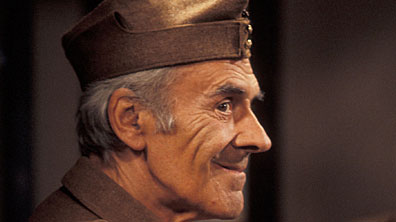
Perhaps behind closed doors Carl Robinson runs the whole operation with the kind of sadistic brutality of Sergeant Williams in the 1965 movie “The Hill” but all indications are that he runs them more in the style of Sergeant Wilson in the long running TV series “Dad’s Army” (Forgive the overly British references here I’ve only just got back!).

Let’s look at the evidence.

Last season Cristian Techera showed up for preseason clearly out of condition and never found any kind of form until the latter half of the campaign.

This season Robinson himself has admitted that Christian Bolaños was unfit when he arrived at training and when Kekuta Manneh was sent to Columbus Crew their coach, Gregg Berhalter eschewed playing him because, “We want to make sure he’s right and prepared and we did notice a little bit of a difference in I guess his stamina compared to our guys”.

All individual incidents for sure but individual incidents that hint at a culture aimed more at keeping the players happy than keeping them at their physical peak.

And do we really have to listen to Robinson list a series of excuses for yet another defeat before he then utters the deathless phrase “You know me, I don’t like to make excuses”?

Or listen to another player saying that the latest loss will “Only make us stronger” and is “Something we can learn from”?

Here’s a word to the wise; if you keep losing games of football then you’re not getting stronger and you’re not learning anything.

You’re just losing games of football.

The next five games already feel season defining given that they consist of a home game to Seattle followed by four tough road games and while the excuses are already built in to that agenda; injuries, travel, playing good teams (Got to love the last of those as it implies that having a good team is some kind of cheat mode) the Whitecaps could emerge from that spell already adrift of their much coveted sixth spot.

Maybe I’m wrong (Hopefully I’m wrong!) and this is just the jet lag talking and Vancouver are about to embark on a run of form that overturns everything that has gone before but, as of now, the Vancouver Whitecaps feel like a really fun place to be if you’re a player but not so great a place to be if you just want to watch the games.

That’s probably not sustainable as a business model and it’s definitely not sustainable as a way of achieving meaningful success on the field.

Unfortunately, unless Carl Robinson has some kind of unexpected epiphany (Though all epiphanies are unexpected I guess) the likelihood is that things will carry on as is for the forseeable future with the parity of MLS ensuring just enough points to keep the hopes of the playoffs mathematically alive until late summer and the inevitable fading away of yet another season.

As Sergeant Wilson himself would enquire of the coach and the organisation as a whole, “Do you think that’s wise?”