Vancouver Whitecaps: At the time of writing

Yes, we are currently in the “at the time of writing” phase of the year in which there’s always the disconcerting sense that as soon as the hapless hack hits “publish” the Whitecaps announce an arrival or departure that nullifies just about everything written.

But, when you think about it, isn’t the whole of life lived through the “at the time of writing” lens?

Every choice we make, every decision we decide upon is subject to the constant flux of an ever-changing world.

And isn’t “constant flux of an ever-changing world” just a pretentious way of saying the same thing twice?

And isn’t asking rhetorical questions just a tedious way of padding out a post that actually has very little to say?

All points well worth considering.

But here’s where we stand with the Vancouver Whitecaps squad rebuild/rebrand right now.

Anthony Blondell will definitely arrive from Venezuela and extensive YouTube viewings imply he may be the kind of big and strong striker to suit Carl Robinson’s preferred style of play.

It was somewhat disconcerting to hear the coach comment that Blondell “can also play out wide” since it brought to mind visions of a misplaced centre-forward lumbering down the wing in the desperate hope of earning a set-piece opportunity.

But hopefully it won’t come to that and Blondell will be looking forward to really getting to know the underside of the giant video board at BC Place as he waits for yet another lofted clearance to finally drop.

Things don’t bode so well for Fredy Montero’s return since all public utterances from the club are somewhere along the lines of a shrug and a smile to indicate there is nothing they can do but sit and wait for a phone call from China.

That would be a shame for two reasons.

Firstly Montero pretty much guarantees goals and secondly because it would have been interesting to see him play in a slightly deeper role behind Blondell as the kind of genuine number ten that Yordy Reyna just isn’t.

The centre of midfield is the most baffling right now.

All the indications are that Nosa Igiebor won’t be back which would make his brief tenure at the club genuinely bizarre.

He was only really introduced to the team for the playoffs, was named the best player of the first half in Seattle by Robinson himself and then that would be that for his Whitecaps career.

It’s hard to believe there wasn’t an agreement in place for next season so either we have to believe the unbelievable or assume one or other of the parties have decided that the said agreement doesn’t look quite so tempting after all.

Weird.

Russell Teibert might be back as the Whitecaps declined his option but are still in discussions with a player who didn’t even make the bench in either of the two final games against Seattle.

Why the club or Teibert would want that relationship to continue is a mystery.

If the squad improves then Teibert necessarily slips even further down the pecking order and the player himself must want more for his career than the occasional run out in games the coach has decided don’t really matter.

And the signing of David Norman Jr to an MLS contract means Teibert can’t even think of himself as the young Canadian hope in the centre of the pitch anymore.

There are some who argue that Teibert is an important part of the club’s public presence in the city but they are wrong.

It’s hard to see Matias Laba returning given his long-term injury and while Christian Bolaños may be tempted to take a lesser deal the chances are that at least one other MLS coach will fancy their chances to get more out of the Costa Rican international than Carl Robinson did.

That would make Brek Shea the current first choice on the left side and (assuming Montero and Laba do leave) the only Designated Player on the team.

That’s probably meaningless in real terms since Shea is very much at the lower level of the DP scale but it screams volumes about the ambition of the club.

So the plan has to be to move Shea on and invest serious money in at least two players of genuine quality.

That has to be the plan right?

Vancouver Whitecaps: Plan B

“Compromise is the devil talking,

and he spoke to me”

The Occasional Flicker-Dexys Midnight Runners

Compromise may be “the devil talking ” to Kevin Rowland, the slightly manic lead singer of a slightly manic band named after a drug designed to make you slightly manic, but to the rest of us it’s often the lifeblood of living in the world.

Giving a little bit here to get a little bit there may be the increasingly eroding foundation of a functioning society but we should cherish it while it still exists.

And given that it seems certain that Carl Robinson will be back as coach of the Vancouver Whitecaps in 2018 (barring the unlikely, but still just possible enough to be cruel, divine intervention of the Welsh FA) maybe it’s time to find a compromise between the way he wants to play the game and the way we want to watch?

So let’s try to figure out if we can find some kind of happy medium.

This whole discussion is predicated on the fact we still don’t know the details of who is in and out of the squad next year of course but such is life.

There seems no reason to believe that David Edgar won’t “return” following his season long injury in 2017 however and that would give Robinson the chance to play three solid central defenders as the foundation of his lineup.

He’s tried it before to mixed reviews but given a preseason to work on the system it’s not inconceivable that Edgar, Waston and Parker could all be starters next year.

That gives Robinson the comfort of lots of defenders on the field but would also allow the full backs to push forward.

Jake Nerwinski was very good at that this year and Marcel de Jong proved capable in the time he was given.

In the ideal world a fit again Brett Levis would be Nerwinski’s counter point on the left given the role requires the ability to get up and down the field with regularity but if it’s not Levis then finding a quality left back should be high on the shopping list.

Those wing backs give Robinson the comfort of even more defenders on the field (particularly in road games) while offering much more of an attacking threat at home.

And the super bonus of this system is that the coach can add one more player to his central midfield.

It’s possible that it was as much the “new car smell” as their play which swayed so many of us toward Ghazal and Nosa at the end of the season, but assuming that wasn’t the case and they actually are a step up in quality then one more decent player alongside them would allow the Whitecaps to really shore up the centre of the pitch in most games.

Even a Tony Tchani or a reassigned Alphonso Davies could do that job with some success.

Up front, and this is the key to the whole thing, if Robinson wants to play a lone striker as a target man (and he really, really does) then he needs to recruit a player who both knows and wants to play that way.

Fredy Montero did brilliantly to turn a sow’s ear of a role into something akin to a silk purse but ultimately it was a waste of both his talent and the club’s money.

If Vancouver can pick up a decent journeyman to lead the line (most likely from Northern Europe) they can then spend the money they save on the striking role to get that extra quality midfielder or even a very, very good left back.

The final piece is to allow Yordy Reyna to roam free somewhere in the vicinity of the number ten position to cause general chaos.

It isn’t a perfect system by any means but on the road it would be able collapse into a veritable seven or eight man defence with the chance of a break enhanced by a genuine target man and at home it could transform into a five man midfield capable of getting in crosses from both flanks.

It wouldn’t be overly pretty football but it might be effective and it might even be exciting at times.

But whatever happens the key is to recruit players designed to fit the system Robinson intends to play.

That should be blindingly obvious but there’s been far too much buyer’s remorse from the Whitecaps over recent seasons as they find themselves constantly trying to force three or four square pegs into two or three round holes.

Can the Vancouver Whitecaps change their ways? (Part One)

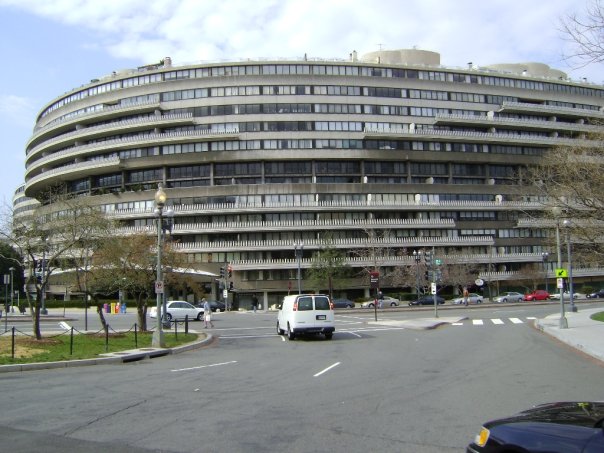
The thing they always say about Watergate is that it wasn’t the crime that destroyed so many careers but the cover up.

I mean, the crime didn’t help obviously, but the sense of wrongdoing was exacerbated by an unwillingness to accept fault and that unwillingness cemented the notion of guilt deep into the mind of the general public.

And after that there was no way back to respectability for the main actors involved.

Obviously nobody would argue the way the Vancouver Whitecaps played those two games against the Seattle Sounders was an actual “crime” (although if  a political party ran with that as one of the main policy agendas I could be tempted to look at their overall platform with a forgiving eye) but what’s made those games an itch that just can’t be scratched is that everybody within the organization, from the coach on up, seems intent on insisting that it really wasn’t too bad.

Almost from the moment the final whistle sounded the official line has been that Vancouver did very well to be where they were and were actually (if you squint a bit, tilt your head to one side and then press your fingers against your temples really hard) quite close to getting a result.

We all saw the games.

They were nowhere near getting a result (although I guess a loss is a result of sorts?)

So one can only asssume that this constant insistence on how splendidly it all went is due to one of two things.

Either it’s an attempt to soft soap those in the local media who don’t really take an interest in the Whitecaps while at the same time supposedly pulling the wool over the eyes of the more casual fans in the hope they can be persuaded that all is well.

Or it’s because the people at the club who really matter, from the coach on up, genuinely believe those performances were acceptable.

If it’s the former then they are fooling nobody who matters to the success of the team and are simply adding to the vague cloud of mistrust that occasionally puffs up from their Gastown offices like an inept mockery of the nearby tourist attraction.

If it’s the latter then heaven help us all because there’s nowhere to go next year but along the same bland and featureless plateau of tolerable competence and intolerable timidity.

The Vancouver Whitecaps were genuinely awful against Seattle and the fact that nobody of note within the organization is willing or able to speak that seemingly unspeakable truth will taint the vision and cloud the minds of supporters for so much longer than ever needed to be the case.


Vancouver Whitecaps Season Review (The Attack)

It’s tempting to make jokes about the phrase “Vancouver Whitecaps Attack” being an oxymoron like “Charlton Athletic” or “Translink Schedule” but there was at least some attack out there some of the time.

Mostly when the opposition allowed it to be by playing open football but it was definitely there because we all saw it.

So how did the players who comprised that attack fare this year?

Fredy Montero- All signs point to Montero not being back with the Whitecaps next season, which is a shame because Carl Robinson finally found somebody who could prosper in his lifelong quest to prove John Donne wrong.

Maybe “prosper” is overstating it but Montero produced his best ever goal tally in MLS and displayed enough on field savvy to make his isolation not quite the optimism killer it was for those who went before him.

We’ll probably always wonder how much better the team would have been if Montero had been granted more support more of the time but the Whitecaps would likely have been much closer to the basement of the table without his presence.

Good luck replacing him with a cheaper option!

Season rating- 7

Yordy Reyna- There’s a school of thought that can’t help but wonder how the Whitecaps would have fared had Reyna been fit all season.

“About the same” is probably the right answer although maybe the Peruvian would have developed a little more understanding with his teammates given the extra time.

When he was finally fit Reyna showed he had both the devilment and desire to make Vancouver just a little bit unpredictable.

But his end of season form was an indication that opponents had figured out that deploying men to mark Reyna out of the game was enough to extinguish the Whitecaps attacking threat.

Like Montero he’ll need far more support if he really is going to be the “difference maker” he’s advertised as.

Season rating-6.5

Erik Hurtado- What can we say about Hurtado? He’s a player who works hard, has power and pace and even improved his all round game in 2017.

But for all that the fact he featured as often as he did in 2017 is an indication of just how bare the Whitecaps attacking bones were.

Hurtado’s work rate and attitude alone mean he deserves some success in his career but if he’s still an option off the bench for Vancouver in 2018 something has gone horribly wrong with the offseason recruitment.

(Narrator’s voice: “Something went horribly wrong with the offseason recruitment”).

Season rating- 6

Nicolas Mezquida- Mezquida isn’t a great player by any stretch of the imagination but he’s a more than capable replacement for either a forward or number ten if needed.

But the reason he seems to be so popular with the fan base is because he plays the game in the exact same way we all imagine we would if given the chance.

He always gives everything, is overjoyed when the team win and devastated when they lose.

Mezquida is like the Spirit Animal of the supporters’ Id; desperately straining at the leash to express himself despite the limitations imposed by the team’s style of play.

Season rating- 6


Vancouver Whitecaps Season Review: The Midfield (Part Two)

There are some couples who only manage to stay together because they are constantly “doing something”.

Renovating the kitchen, building a new deck or turning that small space at the back of the house into an “office slash craft room”.

Because as long as they’re “doing something” they never have to stop and think about the mind-numbing pointlessness of their everyday existence. Never have to question the very fabric of their relationship.

Although I wonder what fabric one would use for the throw cushions in an “office slash craft room”? Why not take a chance and choose a Japanese print from Etsuko Furuya’s Echino line?

It’s bold, but no so bold that it overpowers the space entirely.

Anyway, the early indications are that the Vancouver Whitecaps are very definitely going to be “doing something” when it comes to player movements this off-season, probably in the hope that both they and us will be distracted from the crushing inevitability of another season in which not being able to fault the effort of the players is a high point.

So before a whole bunch of them depart on their merry way let’s begin part the second of our look back at the midfield class of 2017.

Christian Bolaños- Bolaños is the most cultured player in the Whitecaps squad (possibly by some distance) and he’s the only one who looks genuinely comfortable on the ball at all times.

But this season his influence and attitude was a notch down from his impressive debut year.

Put that down to the distractions of World Cup qualifying, a series of injuries or just not fitting into the system the team is playing but whatever the reason if Carl Robinson decides to bring Bolaños back it has to be with an idea of how he will be played in a far more effective role.

It’s telling however that for all the negativity Bolaños was still joint leader on the team in assists for 2017.

Season rating- 5.5

Cristian Techera- The other team leader in assists Techera very much had a bounce back year in 2017.

His set-piece delivery was a crucial factor and he was the only player consistently able to provide quality service to Fredy Montero from open play.

Techera’s form dropped at the tail end of the season but a positive year for him all things considered.

Season rating-6.5

Brek Shea- Shea is about as one-dimensional a footballer as it’s possible to be. He runs hard in the direction he’s facing and offers no nuance or intelligence in his game at all.

On the positive side he proved to be quite a useful substitute during road games, but the impression that he loves what he gets from the game rather than the game itself still lingers.

It’s hard to imagine he will be back in 2018 given his contribution and his salary and his final outing as a bizarre substitute at left-back in Seattle was a fitting tribute to a player who never once looked like finding a permanent role in the team.

Season rating- 4

Bernie Ibini- Ibini’s season felt a lot like Shea’s but with a far more positive spin. An effective substitute who did at least look like he knew what he was doing when he came onto the field and even offered glimpses of quality.

Yet he still lacked the ability to make an impact on a regular basis and “a useful player to have in the squad” might be the best thing we can say about him.

Every squad needs that kind of player of course so perhaps that faint praise isn’t the damning it first appears to be, but the overall impression of Ibini is that he would have been a good signing for an MLS team in 2014 but fortunately/unforunately the league has moved on since then.

Season rating-5 

Alphonso Davies- Maybe now that Davies has turned seventeen he will begin to be analyzed as a footballer rather than simply as a young phenom? Seventeen isn’t that young to be playing professional soccer and next season will be a huge one for Davies in terms of how he grows as a player.

Right now his pace and power cover up his less than perfect first touch and his somewhat perplexing inability to fully slot into the pattern of the team.

Those failings aren’t helped by the sense of expectation that greets his arrival in any game at BC Place and it would be nice if the club toned down the whole “we want to protect Davies while simultaneously mentioning him at every opportunity” vibe.

The best thing next year would be for Davies to be treated like every other player on the squad and incessant media narrative be damned.

Season rating- 5.5 

Nosa Igiebor- We haven’t seen enough of Nosa to make a definitive decision about his qualities but we have seen enough to know that he arrived being touted as a box to box midfielder before being played in a far more defensive role.

His pedigree is undoubtedly good but let’s hope he doesn’t turn out to be yet another attacking threat immolated on the bonfire of Carl Robinson’s defensive vanities.

Season rating-5.5


Vancouver Whitecaps Season Review: The Defence

In another timeline I don’t get to write up the season review of the Vancouver Whitecaps until early December, but these particular versions of ourselves have ended up in this God forsaken temporal cul-de-sac so this is what we get.

Don’t forget though that you can apply for timeline reassignment by sending Form T4867(a) to the Trans Temporal Authority during the month of December (memo to self: make sure this particular timeline has acquired knowledge of Temporal Jumping before publishing this).

So let’s take a look at how the Whitecaps defenders have performed this year.

David Ousted- Maybe some people would have guessed that Ousted would be out of the club at the end of the season given his contract status but very few would have predicted that his ousting (pun intended) would come before the season end.

The signing of Stefan Marinovic gave Carl Robinson the opportunity to replace Ousted, but what made that opportunity genuinely credible was the fact that mistakes were creeping into Ousted’s game.

Not huge blunders, but enough to justify a switch.

In the end it made no difference and Ousted can leave the team (assuming he does leave) with his head held high.

He was a player who always cared, always wanted to win and who could speak about games in a manner the supporters could relate to.

Season rating-6

Stefan Marinovic- We haven’t seen enough of Marinovic’s body of work to make any genuine assessment of how he will be next year but what we have seen is reassuring.

He was at fault for at least one goal in Portland but apart from that one blemish he has played with confidence.

Less combustible than Ousted he should instill a calm authority to the back line in 2018.

Season rating-6

Sheanon Williams- During the opening spell of the season Williams seemed to be exactly what the Whitecaps were missing from last year.

A steady, experienced right back who could often get forward to augment the attack.

He also appeared to be a positive locker room presence who was genuinely excited by the challenge of playing for a new club.

Then in June an alleged domestic incident led to Williams being suspended and assessed by MLS’ Substance Abuse and Behavioral Health Program and, from a playing point of view, it was effectively the end of his season.

His occasional start after that revealed a player who was either physically or mentally no longer capable of being “in the game”.

A sad state of affairs for so many reasons.

Season rating-4

Jake Nerwinski- Nerwinski arrived as a promising backup to Williams and ended the season as one of the first names on the team sheet.

It was the very definition of a player making the most of his opportunities.

There were even games where Nerwinski seemed to be the Whitecaps most potent attacking threat thanks to his boundless energy traversing up and down the right side of the field and a total of five assists from the right back posiiton is no mean feat at all.

The one area of concern is that both Portland and Seattle targeted him with some success in recent games  and he’ll need to learn how to deal with that kind of pressure as his career progresses.

But he’s shown that he is a smart enough player to take those lessons on board and his play was one of the genuine bright spots of the season.

Season rating-6.5

Jordan Harvey- Maybe some people would have guessed that Harvey would be out of the club at the end of the season given his contract status but very few would have predicted that his ousting (not even a pun) would come before the season end.

Marcel de Jong’s Gold Cup gave Carl Robinson the opportunity to replace Harvey at the business end of the season, but what made that opportunity genuinely credible was the fact that mistakes were creeping into Harvey’s game.

Not huge blunders, but enough to justify a switch.

In the end it made no difference and Harvey can leave the team (assuming he does leave) with his head held high.

He was a player who always cared, always wanted to win and who could speak about games in a manner the supporters could relate to.

Season rating-5.5

Marcel de Jong- The Canadian was given the chance to earn a starting spot in the late summer and he grabbed itwith both feet.

He offered more going forward than Harvey, was defensively solid and was also one of the few on the Vancouver back line who was genuinely capable of playing passes of consistent quality.

Throw in a decent shot and set-piece delivery and de Jong has placed himself at number one for the number three role in 2018.

Season Rating-6

Kendall Waston- There were some (including me) who thought the club would be better off trading on Waston’s reputation in the off season in the hope of getting a decent return for a player who had been somewhat of a liability in 2016 given his predilection for red cards and overreaction.

But whether it was the captaincy, a different way of playing or simply Waston taking stock of where he had gone wrong he was a vital presence in 2017.

His threat from attacking set-pieces obviously helped his cause but, far more importantly, he was once again defending as a defender rather than as a player who wants to be noticed.

His heroics with Costa Rica in World Cup qualifying may alert the attention of bigger clubs around the world but Waston is ideally suited to MLS; big and strong but limited in his passing range

If he chooses to stay in Vancouver for the rest of his career he could become one of the clubs iconic players.

Let’s hope that’s the path he chooses.

Season rating-7  

Tim Parker- It says a lot that Tim Parker had perhaps his least consistent year for the Whitecaps since he arrived here and yet was still in no danger of losing his starting spot.

Not that Parker was terrible. It was just the odd moment where he seemed to switch off or find himself out of position.

And while Waston’s passing can be described as “limited” Parker’s is “unlimited” in that the ball really could go anywhere.

If he could figure that out (or be played in a system that doesn’t rely on him to hit the pass that starts attacks) he would be one of the best central defenders in the league.

Season rating-6 

Next time out it’s the midfield (and there’s a lot of them!)


Frankly, Mr Robinson

“Aim for the sky and you’ll reach the ceiling. Aim for the ceiling and you’ll stay on the floor”. Bill Shankly

Carl Robinson will almost certainly be back as coach of the Vancouver Whitecaps next season.

After all, he’s a safe pair of hands who can do enough to get them into the playoffs most years and who is happy to talk down the potential of his own team to ensure nobody gets too upset whenever they fall short or fail to perform.

But if there’s one metaphor to sum up his tenure thus far it’s those “ceilings” spoken of by Bill Shankly.

There’s the ceiling of his own coaching ability which is limited to one particular style of play no matter who is in the squad.

The illusion that a forward of genuine quality and a dynamic creative presence would allow Robinson to play more attractive football has been shattered by the realization that Fredy Montero and Yordy Reyna are still playing in a team that is specifically designed to isolate them.

Neither does it matter who is touted as a box to box saviour because Robinson won’t want them to play as a box to box saviour. He will want them to sit deep and stifle the midfield.

And in every game of consequence he has been out coached to an alarming degree, largely because the way he sets up the team is so predictable.

Don’t give away silly fouls near your own penalty area, don’t push too many men forward and the Whitecaps just won’t be able to beat you.

There’s the ceiling his style of play imposes on young players.

It can be argued that defenders such as Parker and Nerwinski have flourished under Robinson but not a single young attacking player has improved.

What that means for the future of Alphonso Davies is cause for concern.

Is playing in a team that doesn’t want possession good for his long-term growth? Is playing in a team that seems to value his defensive contribution over all else beneficial? Is playing in a team in which the coach constantly thinks the opposition are to be feared no matter who they are or where the game is played good for his confidence?

The answer to all those questions is “No” by the way.

There’s the ceiling of how much the club can grow under his stewardship.

It’s true that Robinson’s main focus has to be on getting results but the first leg against Seattle was so devoid of ambition that very few of those “Whitecaps curious” attendees among the 27,000 will be coming back.

Play conservative football and win and perhaps something limited but substantial can be built. Play conservative football and lose and the foundations will begin to shift.

Right now the Whitecaps are at the limit of how far they can go in terms of crowd numbers with this style of play (actually, that limit may have already been reached last season and this year could be the start of the decline).

Whatever the case, more of the same next season will see those numbers dissipate just a little bit more.

There’s the ceiling of his relationship with the supporters.

It’s kind of odd that Robinson, who clearly has a very good relationship with his players, has never really connected with the Whitecaps fan base.

Part of that is because he treats all interviews and press conferences as a way of either saying nothing or as a way of dissembling.

And again, just like his preferred style of play, that’s his prerogative.

But if you don’t engage with the fans by acknowledging their concerns or speaking in a way that elicits or invites empathy then those poor performances are so much tougher to get through.

It could be that his whole “we are up against it” philosophy precludes him from this kind of engagement or it could be that he regards his own knowledge of the game to be so far above those who pay for tickets week in and week out that they don’t merit consideration.

But if Robinson displayed the same openness and willingness to engage with the fans as he does with an opposition player taking a throw in he might be given a little more slack when things go awry.

And finally there’s the ceiling of his own ambition.

Maybe he’s not to blame for this particular flaw because it could be the club ethos as a whole but the overwhelming sense is of a coach who once he’s reached a level he thinks is acceptable for the season regards anything else as simply a bonus.

From the moment the Whitecaps reached the playoffs this year Robinson began to tinker with team selection and tactics and lo and behold the performances dipped.

Instead of asking more of his players he asked less. He left in-form performers out of lineups and seemingly saw the final three games of the campaign as the chance to decide what his best eleven should be.

Which is kind of crazy once you really think about it.

Unsurprisingly any momentum was lost and we ended up watching the team turn in those two performances against Seattle.

So after four years of observing his body of work as a coach we can conclude that while Robinson really wants to win games and trophies he doesn’t really need to win them.

He’s more than happy to hit whatever preseason target the back or front office assign him and then explain with a smile that his players just aren’t as good as their opponents.

Despite all of the above though he will probably be back in 2018 and there will no doubt be talk of new signings and rumours of departures and then the preseason advertising campaign will proclaim how much everybody involved with the Whitecaps cares for the club and for the supporters and for the history.

And then this time next year Carl Robinson will once again be shrugging his shoulders and giving a “Well, what can you do?” grin while our Cascadian rivals celebrate in the background.


Vancouver Whitecaps lose: But look at the cute moose!

It was probably fitting that the Vancouver Whitecaps season should end with a whimper of a 2-0 defeat to the Seattle Sounders in the second leg of the Conference semi-final on Wednesday evening.

After all, Carl Robinson’s whole philosophy is based around making his team as tedious to watch as possible and he achieved the zenith of that ambition over these two games.

Although he must have been disappointed to see a half-hearted Christian Bolaños header count as the only shot on goal over the full 180 minutes when the perfect zero was so nearly on the cards.

What’s left to say?

If you don’t try to win games you won’t win games?

If you don’t think a Cascadian derby playoff series is reason to get your team fired up to score then what is?

Bringing on Davies and Shea who haven’t played ten minutes of good football between them in the last two months displayed typically poor in-game management?

A bizarre end to the season which saw the team lose any rhythm and cohesion due to a constant switching of personnel and tactics?

The belief that relying on “fine lines” is the only way to win games?

The lack of belief in players, constantly speaking of them as underdogs and asking them to play a style of football that sucks the life out of their creativity?

The mind numbing limits to any sense of ambition both on the field and off it?

I could go on, but there will be time enough for that and more over the coming weeks when we can consider whether the “fire Robbo” tweets of this evening are the wounded sighs of unhappy creatures or something containing more substance.

For now though it’s on to a Winter of player moves and speculation, which is always fun in itself I guess.

But how we must all wish we were back in the height of Summer, drinking a cold beer in our Whitecaps themed gazebo and dreaming of what might be.

But “what might be” always turns out to be an illusory stop on the road to “what is”.

But oh for a just a few more shots on goal!

Time for the Soccer Shorts player ratings.

Marinovic-5.5, Nerwinski-5, de Jong-6*, Waston-5.5, Parker-5.5-Nosa-5.5, Ghazal-6, Techera-4.5, Bolaños-5, Reyna-4, Montero-5 (Harvey-5)


Vancouver Whitecaps: Cue Fanfare

I wonder if anybody has ever walked away from a chess match and said ‘Wow! That was a real game of soccer”?

Almost certainly not because, you know, the comparison would be ridiculous.

But not when the situation is reversed apparently because whenever a really tedious game of football has been played somebody somewhere will opine that “it was a real chess match”.

Maybe sometimes they’ll even stretch to “that was one for the purists” but the chess match metaphor seems to be the main phrase to go to.

That’s not to say that some games can’t be genuinely interesting tactical battles with coaches switching formations and counter punching each other with every substitution, but let’s not try to pretend that Sunday’s 0-0 tie between the Vancouver Whitecaps and the Seattle Sounders fits into that category.

Straight from the first whistle both coaches set their team up not to concede rather than to score  and that didn’t change at all for the full ninety minutes plus change.

That’s hardly the famous Fischer vs Spassky “Alekhine’s Defence” game now is it?

One positive for the Whitecaps was that they were able to keep possession pretty well, notching up the most passes and highest completion rate of the season.

That probably undermines Robinson’s previous assertions that he just doesn’t have the players to play that kind of football but I don’t think anybody really took those claims at face value or were under any illusions about what kind of football the coach thinks is effective at this stage of his tenure.

It’s certainly possible that his caution will pay dividends in the return leg on Thursday evening and there must be fans of the Sounders who are equally frustrated about their own team’s unwillingness to push for what would have been a vital away goal.

So there’ll be a whole bunch of “what ifs” and “why didn’t yous?” once the dust has settled on this tie as a whole.

And that’s the thing with such a negative approach to any game.

If it works the fans are consoled by the result, but if it doesn’t work they are left with the sense that the team they root for and love has failed to step up to the plate when it really mattered.

And that’s a bitter taste to linger in the throat during the whole of the off-season.


Whitecaps hold Seattle to a scoreless draw!

Ha! That will teach all those fair weather fans who thought they’d go to an exciting game of playoff soccer a valuable lesson.

No way they’ll be back again next season and that means shorter lines at the concession stands for the more loyal supporters among us.

Cheers Robbo!

It does sometimes feel as though Carl Robinson has never seen a big game against a Cascadian rival in which he doesn’t want his team to fold up within themselves like an armadillo with anxiety issues and so it proved in the 0-0 tie with the Seattle Sounders at BC Place on Sunday evening.

A different coach may have decided to build on the exciting 5-0 win in midweek and a different coach may have decided to make use of the sellout and lively home crowd to send his team out all guns blazing for the first twenty minutes at least in an attempt to turn the home stadium into a cauldron of passionate fervour.

But Robinson isn’t that kind of coach and so we got the safety first approach we have grown to know and tolerate until it soon became painfully clear that neither team was going to take any real risk going forward at all.

Certainly without Reyna or Mezquida on the field Fredy Montero was back to his splendid isolation, staring in wonder at aimless high balls launched in his vague direction from somewhere in the back four.

Tony Tchani once again looked like a man who could walk into an Apple Store without being noticed and Brek Shea played like somebody who had never seen a football until the first whistle blew.

On two separate occasions he was literally knocked over by the ball. I mean, kudos for the much needed comedy interludes but he’s on a DP salary!

And yet for all that ineptitude a goalless draw may not be that bad a result and maybe Robinson was thinking back to the playoff series against Portland two seasons ago when he played for the same result in Portland but then got burned by the away goal back at BC Place?

One good set-piece, one Seattle error and Vancouver are very much in the box seat on Thursday evening.

But it’s just that sometimes it would be nice to have a coach who wasn’t quite so prosaic, wasn’t quite so afraid of letting his players play and wasn’t quite so entangled in the belief that both him and his team are overcoming insurmountable odds in every game.

A coach who wanted his team to rise to the big occasion every once in a while and not suffocate it under the pillow of a crowded midfield.

Of course we long suffering supporters aren’t the ones who really need the sympathy tonight; that should all be directed toward whoever has to put together the twenty-minute highlight package for that game (or even the four-minute highlight package to be honest).

Spare a thought for their souls.

Time for the Soccer Shorts play ratings.

Marinovic-5.5, Nerwinski-5.5, de Jong-5.5, Waston-5.5, Parker-5.5, Ghazal-5.5*, Tchani-5, Shea-3, Bolaños-5.5, Montero-5.5