Vancouver Whitecaps: The resolutions will not be televised

What is a New Year resolution?

It’s the act of resolving to follow a particular path over the next twelve months. And “resolve” is as close to “re solve” as makes no difference and so leads to the conclusion that what we’re really attempting each new year is to solve the same puzzle over and over again.

We figure it out for a while, then forget, only to be faced with the exact same conundrum come year’s end.

I’ll leave you to decide what your own particular puzzle is because once you have figured that out it will never need solving again.

(Incidentally, my resolution is to see how many trite platitudes I can pass off as wisdom in 2018).

But what resolutions should the Vancouver Whitecaps be making for the coming year?

Well, there will be time enough to deal with on field issues as the season progresses so let’s take a look at how they might be able to improve away from the playing surface.

More focused transfer policy- The Whitecaps trading record isn’t terrible but it isn’t great either. Too often they seem to have acquired a player because he was available than because he fitted a particular need.

Think Fredy Montero (a great season in the end but not the player to play that role) or Brek Shea or Giles Barnes. All players with name recognition in MLS but who all struggled to find the right role within the side.

Early indications are good in this respect.

Both Anthony Blondell and Kei Kamara have potential issues but both are at least equipped to play that lone striker role.

And while the temptation to yearn for a quality number ten or a box to box midfielder may be overwhelming, if Carl Robinson doesn’t want to send out a team in that way (and probably can’t send out a team in that way) then it’s a waste of everybody’s time and TAM.

Just bring in better defensive midfielders and wide players.

Trust the sport- One of the main appeals of football/soccer is, for the want of a better word, “edginess”.

From the supporter culture the team celebrates in marketing but seems to mistrust in reality, to the blatant cheating on the field that alienates so many North American sports lovers to the sheer pureness of the sporting spectacle so free of unnatural interruptions (let’s not get into a debate about VAR here).

Soccer goes hand in hand with youth culture, politics, music and just about everything else commercial entities want to align themselves with and profit from.

Edginess sells.

The Portland Timbers (for one) have certainly figured this out and MLS itself flirts with the idea without ever fully committing.

But the Whitecaps seem more intent on trying to be a less interesting version of the Canucks, stepping down on anything within BC Place or beyond that would offend the type of ticket holder who regards going to the game as a chance to talk about which corporate targets they have met this week.

Let the odd none football related banner go unremarked, be relaxed if a player speaks out about a current issue and don’t respond to every surge of internet outrage by trying to calm waters which probably needed disturbing anyway.

Easier said than done I know but controversy is the lifeblood of soccer more than any other sport, so enjoy the free advertising and don’t sweat the small stuff.

Be better on social media- there’s a part of me that doesn’t give a flying flapjack about what the Whitecaps Twitter account does and doesn’t say, but this is the modern world and it matters to an awful lot of people.

And, like it or not, social media presence becomes the personality of the club on the days when the team isn’t playing.

If you want an example of how effective a marketing tool it can be then take a look at the TSS FC Twitter account which strikes the exact right tone for the people who go to their games.

Now I get that pleasing a narrow range of fans who go to Swangard is a much broader rope to walk along than the diversity of those who attend BC Place, but if you’re going to have a social media presence (and they are) then make it one that consistently has a personality beyond bland promotional tweets.

Do something nice for the supporters- And I’m not talking about early bird specials on overpriced alcohol here.

Last year New York City FC offered free tickets to their game in New England to any fan who attended all their home games thus far and many a season ticket package across the league comes with so much more than those distributed by the Whitecaps.

Do these things matter in the grand scheme of things?

Probably not, but they are a remarkably cheap way (in terms of overall marketing budget) of letting loyal followers know their loyalty actually means something.

Too often the Whitecaps feel like they have adopted the cable company policy of not giving two squawks for those who have already signed on the dotted line and are only interested in those they have yet to ensnare.

But soccer doesn’t work like that (and I’m not even sure that cable companies will work like that in the long run) because the loyal follower now will be a loyal follower for life and so will their children and their grandchildren if they are treated with even a degree of regard.

Spend a little and get a a boat load of good will in return.

Overall things aren’t terrible in the off field world of the Vancouver Whitecaps but it’s frustrating to see how much better it could be with just a little imagination and a little more courage (that goes for the on the field performance too but I promised I wouldn’t get into that this time around).

Is the schedule out yet?

A Christmas Carl: Part One-Pert’s Apparition

I have endeavoured in this Ghostly little blog, to raise the Ghost of an Idea, which shall not put my readers out of humour with themselves, with each other, with the season, or with me. May it haunt their houses pleasantly, and no one wish to lay it.

Their faithful Friend and Servant,
R. B.

Martyn Pert was scouting players in South America: to begin with. There is no doubt whatever about that. The register of his travel was posted on the Instagram accounts of both #IluvdaCaps!!! and #BlooandWhite4ever who both saw him boarding a plane at Vancouver airport: and Robbo himself had seen the flight tickets and approved the itineray. Martyn Pert was in South America.

Robbo knew he was in South America? Of course he did. How could it be otherwise? Robbo and he were partners for I don’t know how many years. Robbo was his gaffer, head coach and his friend.

The mention of Pert’s travels brings me back to the point I started from. There is no doubt that Pert was in South America. This must be distinctly understood, or nothing wonderful can come of the story I am going to relate.

Robbo never painted out Pert’s name from the locker room. There it stood, hours and days after the flight, above the door to the boot room: Robbo and Pert. The pair were known as Robbo and Pert. Sometimes people new to the media called Robbo Robbo, and sometimes Pert, but he answered to both names. It was all the same to him.

Oh! But he was so defensively minded Robbo! A squeezing, wrenching, grasping, scraping, clutching, kind of defence! He carried that defensive style of play always about with him; he plotted in his office in the dog-days of the season; and didn’t change it one degree at Christmas.

Opponents playing attractive football had little influence on Robbo.

Nobody ever stopped him in the street to say, with gladsome looks, “My dear Robbo, how are you? When will we see your team play again?” No baristas implored him to bestow a tactical nugget on how to break down two rows of four, no children asked him why he preferred inverted wingers, no man or woman ever once in all his life inquired the way to goal of Robbo. Even the visually impaired people’s dogs appeared to know him; and when they saw him coming on, would tug their owners into doorways and up alleys; and then would wag their tails as though they said, “Quick before he starts talking about how possession stats don’t really matter”

But what did Robbo care! It was the very thing he liked. To edge his way along the crowded paths of life, warning all attacking intent to keep its distance.

Once upon a time—of all the good days in the year, on Christmas Eve—Robbo sat busy in his office. It was cold, bleak, biting weather: foggy withal: and he could hear the players on the pitch outside, go wheezing up and down, beating their hands upon their breasts, and stamping their feet upon the turf to warm them. The city clocks had only just gone three, but it was quite dark already—it had not been light all day—and striplights were flaring in the windows of the neighbouring offices, like ruddy smears upon the palpable brown air. The fog came pouring in at every chink and keyhole, and was so dense without, that although the pitch was of the narrowest (to prevent skillful wide players effectively plying their trade), the offices opposite were mere phantoms. To see the dingy cloud come drooping down, obscuring everything, one might have thought that Nature lived hard by, and was brewing on a large scale.

The door of Robbo’s office was open that he might keep his eye upon his attacking midfielders.

“A merry Christmas, Boss!” cried a cheerful voice. It was the voice of Nicolas Mezquida, who came upon him so quickly that this was the first intimation he had of his approach.

“Bah!” said Robbo, “Fine lines!”

He had so heated himself with rapid running in the fog and frost, this player, that he was all in a glow; his face was ruddy and handsome; his eyes sparkled, and his breath smoked again.

“Christmas isn’t about fine lines Boss!” said Mezquida. “You don’t mean that, I am sure?”

“I do,” said Robbo. “Merry Christmas! What right have you to be merry? What reason have you to be merry? You’re poor enough thanks to the salary cap.”

“Come, then,” returned Mezquida gaily. “What right have you to be dismal? What reason have you to be morose?”

Robbo having no better answer ready on the spur of the moment, said, “Bah!” again; and followed it up with “Fine lines!”

“Don’t be cross, Boss!” said Mezquida.

“What else can I be,” returned the coach, “when I live in such a world of fools as this? Merry Christmas! Out upon merry Christmas! What’s Christmas time to you but a time for playing football with no defensive structure; a time for finding yourself a year older, but not another clean sheet to your name; a time for balancing your goal difference and having every goal scored against feel like ash in your mouth.”

“Boss!” pleaded Mezquida.

“Mezquida!” returned the coach sternly, “keep Christmas in your own way, and let me keep it in mine.”

“Keep it!” repeated Mezquida. “But you don’t keep it.”

“Let me leave it alone, then,” said Robbo. “Much good may it do you! Much good it has ever done you! Now get out there and start working on closing down the opposition central defenders!”

“Don’t be angry, boss. Come! Play football with us to-morrow.”

“Good afternoon!” said Robbo

“Merry Christmas!” said Mezquida

“Good afternoon!” replied Robbo

Meanwhile the fog and darkness thickened so, that people ran about with iPhones lit up, proffering their services to go before the UberEATS cycle riders, and conduct them on their way. The ancient tower of a church, whose gruff old bell was always peeping slily down at Robbo out of a Gothic window in the wall, became invisible, and struck the hours and quarters in the clouds, with tremulous vibrations afterwards as if its teeth were chattering in its frozen head up there. The cold became intense. In the main street, some labourers were replacing a demolished gas station with a community garden, and had lighted a great fire in a brazier, round which a party of tattooed and bearded men with growlers had gathered: warming their hands and winking their eyes before the blaze in rapture.

At length the hour of shutting up the training centre arrived. With an ill-will Robbo dismounted from his chair, and tacitly admitted the fact to the expectant players on the field

“You’ll want all day to-morrow, I suppose?” said Robbo.

“If quite convenient, sir.” said the players in unison.

“It’s not convenient,” said Robbo, “and it’s not fair. If I was to stop a day’s worth of TAM, you’d think yourself ill-used, I’ll be bound?”

The players smiled faintly.

“And yet,” said Robbo, “you don’t think me ill-used, when I pay a day’s TAM for no defensive work.”

The players observed that it was only once a year.

“A poor excuse for picking Major League Soccer’s pocket every twenty-fifth of December!” said Robbo, buttoning his exquisitely tailored great-coat to the chin. “But I suppose you must have the whole day. Be here all the earlier next morning.”

Robbo took his melancholy protein drink in his melancholy office; and having read all the latest training manuals on how to play with an isolated striker, and beguiled the rest of the evening with GIFs of Kendall Waston tackles, prepared to leave for home.

Now, it is a fact, that there was nothing at all particular about the football on the floor.  It is also a fact, that Robbo had seen it, night and morning, during his whole residence in that place; also that Robbo had as little of what is called fancy about him as any man in the city of Vancouver, even including—which is a bold word—City Hall, real estate developers, and craft beer enthusiasts. Let it also be borne in mind that Robbo had not bestowed one thought on Pert, since his flight to South America. And then let any man explain to me, if he can, how it happened that Robbo, having risen from his chair, saw in the football, without its undergoing any intermediate process of change—not a football, but Pert’s face.

Pert’s face. It was not in impenetrable shadow as the other objects in the office were, but had a dismal light about it, like a bad lobster in a dark cellar. It was not angry or ferocious, but looked at Robbo as Pert did look.

As Robbo looked fixedly at this phenomenon, it was a football again.

To say that he was not startled, or that his blood was not conscious of a terrible sensation to which it had been a stranger from infancy, would be untrue. But he put his hand upon the door handle and prepared to head home.

He did pause, with a moment’s irresolution, before he walked the door; and he did look cautiously behind it first, as if he half expected to be terrified with the sight of Pert’s tracksuit floating in the corridor. But there was nothing.

“Fine lines!” said Robbo; and walked across the room.

After several turns to the door and to his desk, he sat down again. As he threw his head back in the chair, his glance happened to rest upon a whistle, a disused whistle, that hung in the room, and communicated for some purpose now forgotten with the players during training. It was with great astonishment, and with a strange, inexplicable dread, that as he looked, he saw this whistle begin to swing. It swung so softly in the outset that it scarcely made a sound; but soon it rang out shrilly, and so did every whistle in the training centre.

This might have lasted half a minute, or a minute, but it seemed an hour. The whistles ceased as they had begun, together. They were succeeded by a clanking noise, as if some person were dragging a heavy chain over the treadmills in the state of the art fitness room.

The fitness room door flew open with a booming sound, and then he heard the noise much louder, on the floors below; then coming up the stairs; then coming straight towards his door.

“It’s fine lines still!” said Robbo. “I won’t believe it.”

His colour changed though, when, without a pause, it came on through the heavy door, and passed into the room before his eyes. Upon its coming in, the dying flame leaped up, as though it cried, “I know him; Martyn Pert!” and fell again.

The same face: the very same. Pert in his usual tracksuit, socks, and boots. The chain he drew was clasped about his middle. It was long, and wound about him like a tail; and it was made (for Robbo observed it closely) of shin pads, corner flags, yellow cards and goal nets.

“How now!” said Robbo, caustic and cold as ever. “What do you want with me?”

“Much!” — Pert’s voice, no doubt about it.

“Who are you?”

“I am your partner, Martyn Pert”

“Can you — can you sit down?” asked Robbo, looking doubtfully at him.

“I can.”

“Do it, then.”

Robbo asked the question, because he didn’t know whether a figure so unreal might find himself in a condition to take a chair; and felt that in the event of its being impossible, it might involve the necessity of an embarrassing explanation. But the figure  sat down on the opposite side of the desk, as if he were quite used to it.

And then the figure raised a frightful cry, and Robbo fell upon his knees, and clasped his hands before his face.

“You will be haunted,” cried the figure, “by Three Spirits.”

“I — I think I’d rather not,” said Robbo.

“Without their visits,” said the figure, “you cannot hope to shun the path you tread.

The figure then held up a fourth official’s time board (sponsored by TAG Heuer)

“Expect the first when this board moves to the number one”

“Couldn’t I take ’em all at once, and have it over, Martyn?” hinted Robbo.

“Expect the second when the board moves to the number two. The third upon the number three. Look to see me no more; and look that, for your own sake, you remember what has passed between us.”

When it had said these words, the figure stood and walked backward from him; and at every step it took, the office window raised itself a little, so that when the figure reached it, it was wide open.

Once the figure departed Robbo closed the window, and examined the door by which it had entered. It was double-locked, as he had locked it with his own hands, and the bolts were undisturbed. He tried to say “Fine lines!” but stopped at the first syllable. And being, from the emotion he had undergone, or the fatigues of the day, or his glimpse of the Invisible World, or the dull conversation of the figure, or the lateness of the hour, much in need of repose; sat back down in his chair, without undressing, and fell asleep upon the instant.

Vancouver Whitecaps need a Kamara

The good news is that the Whitecaps have at least realised that signing players who fit with Carl Robinson’s style of play is an eminently sensible approach.

After the announcement of Anthony Blondell a few days ago the club has now added Kei Kamara to the mix (and, indeed, the mixer).

The bad news is that the Kamara signing feels a little bit like opening your main gift on Christmas morning and finding you are now the proud owner of an iPhone5C.

I mean, it will do the job and everything but it’s just it would have been better to have received it at least a couple of years ago when it was a little more state of the art and a little less in a state of repair.

Both the club and Robinson have been keen to emphasise both how suited Kamara is to the way they play and (once more with feeling) how “good he is in the locker room”.

The obsession with constantly repeating this phrase for every new signing aside the actual evidence suggests that Kamara can sometimes be “challenging” in the locker room just as much as “good” and one area where the coach has seemed to yet really find his feet is in dealing with big personalities who aren’t totally content with events both on and off the field.

That dynamic could be an interesting one to watch.

Perhaps more interesting than the Kamara signing is that ESPN’s Jeff Carlisle has indicated that the Whitecaps are still trying to bring Fredy Montero back on loan from his Chinese club for the 2018 season.

Granted this policy of stocking up on proven but ageing MLS forwards isn’t the most exciting or imaginative way of doing business and there’s a degree of short-termism which bodes ill for the long run.

But seeing Montero play slightly deeper behind Kamara with (and this is very much up in the air given the circumstances) Reyna on the left side and Blondell as cover wouldn’t be a bad way of doing things.

But if neither Montero or Reyna are back next season then there’s suddenly an alarming lack of any genuine creativity around the opposition penalty area.

That may not bother Robinson all that much given how well his team fared in the standings in 2017 but the odds of him catching the lightning in a bottle of set-piece goals and a couple of very against the run of play road wins isn’t the foundation for a successful season.

Time will tell as more arrivals and departures unfold in the coming weeks but, as it stands, Vancouver have made a couple of useful additions in the forward area.

That’s good I guess.

Vancouver Whitecaps: At the time of writing

Yes, we are currently in the “at the time of writing” phase of the year in which there’s always the disconcerting sense that as soon as the hapless hack hits “publish” the Whitecaps announce an arrival or departure that nullifies just about everything written.

But, when you think about it, isn’t the whole of life lived through the “at the time of writing” lens?

Every choice we make, every decision we decide upon is subject to the constant flux of an ever-changing world.

And isn’t “constant flux of an ever-changing world” just a pretentious way of saying the same thing twice?

And isn’t asking rhetorical questions just a tedious way of padding out a post that actually has very little to say?

All points well worth considering.

But here’s where we stand with the Vancouver Whitecaps squad rebuild/rebrand right now.

Anthony Blondell will definitely arrive from Venezuela and extensive YouTube viewings imply he may be the kind of big and strong striker to suit Carl Robinson’s preferred style of play.

It was somewhat disconcerting to hear the coach comment that Blondell “can also play out wide” since it brought to mind visions of a misplaced centre-forward lumbering down the wing in the desperate hope of earning a set-piece opportunity.

But hopefully it won’t come to that and Blondell will be looking forward to really getting to know the underside of the giant video board at BC Place as he waits for yet another lofted clearance to finally drop.

Things don’t bode so well for Fredy Montero’s return since all public utterances from the club are somewhere along the lines of a shrug and a smile to indicate there is nothing they can do but sit and wait for a phone call from China.

That would be a shame for two reasons.

Firstly Montero pretty much guarantees goals and secondly because it would have been interesting to see him play in a slightly deeper role behind Blondell as the kind of genuine number ten that Yordy Reyna just isn’t.

The centre of midfield is the most baffling right now.

All the indications are that Nosa Igiebor won’t be back which would make his brief tenure at the club genuinely bizarre.

He was only really introduced to the team for the playoffs, was named the best player of the first half in Seattle by Robinson himself and then that would be that for his Whitecaps career.

It’s hard to believe there wasn’t an agreement in place for next season so either we have to believe the unbelievable or assume one or other of the parties have decided that the said agreement doesn’t look quite so tempting after all.

Weird.

Russell Teibert might be back as the Whitecaps declined his option but are still in discussions with a player who didn’t even make the bench in either of the two final games against Seattle.

Why the club or Teibert would want that relationship to continue is a mystery.

If the squad improves then Teibert necessarily slips even further down the pecking order and the player himself must want more for his career than the occasional run out in games the coach has decided don’t really matter.

And the signing of David Norman Jr to an MLS contract means Teibert can’t even think of himself as the young Canadian hope in the centre of the pitch anymore.

There are some who argue that Teibert is an important part of the club’s public presence in the city but they are wrong.

It’s hard to see Matias Laba returning given his long-term injury and while Christian Bolaños may be tempted to take a lesser deal the chances are that at least one other MLS coach will fancy their chances to get more out of the Costa Rican international than Carl Robinson did.

That would make Brek Shea the current first choice on the left side and (assuming Montero and Laba do leave) the only Designated Player on the team.

That’s probably meaningless in real terms since Shea is very much at the lower level of the DP scale but it screams volumes about the ambition of the club.

So the plan has to be to move Shea on and invest serious money in at least two players of genuine quality.

That has to be the plan right?

Vancouver Whitecaps: Plan B

“Compromise is the devil talking,

and he spoke to me”

The Occasional Flicker-Dexys Midnight Runners

Compromise may be “the devil talking ” to Kevin Rowland, the slightly manic lead singer of a slightly manic band named after a drug designed to make you slightly manic, but to the rest of us it’s often the lifeblood of living in the world.

Giving a little bit here to get a little bit there may be the increasingly eroding foundation of a functioning society but we should cherish it while it still exists.

And given that it seems certain that Carl Robinson will be back as coach of the Vancouver Whitecaps in 2018 (barring the unlikely, but still just possible enough to be cruel, divine intervention of the Welsh FA) maybe it’s time to find a compromise between the way he wants to play the game and the way we want to watch?

So let’s try to figure out if we can find some kind of happy medium.

This whole discussion is predicated on the fact we still don’t know the details of who is in and out of the squad next year of course but such is life.

There seems no reason to believe that David Edgar won’t “return” following his season long injury in 2017 however and that would give Robinson the chance to play three solid central defenders as the foundation of his lineup.

He’s tried it before to mixed reviews but given a preseason to work on the system it’s not inconceivable that Edgar, Waston and Parker could all be starters next year.

That gives Robinson the comfort of lots of defenders on the field but would also allow the full backs to push forward.

Jake Nerwinski was very good at that this year and Marcel de Jong proved capable in the time he was given.

In the ideal world a fit again Brett Levis would be Nerwinski’s counter point on the left given the role requires the ability to get up and down the field with regularity but if it’s not Levis then finding a quality left back should be high on the shopping list.

Those wing backs give Robinson the comfort of even more defenders on the field (particularly in road games) while offering much more of an attacking threat at home.

And the super bonus of this system is that the coach can add one more player to his central midfield.

It’s possible that it was as much the “new car smell” as their play which swayed so many of us toward Ghazal and Nosa at the end of the season, but assuming that wasn’t the case and they actually are a step up in quality then one more decent player alongside them would allow the Whitecaps to really shore up the centre of the pitch in most games.

Even a Tony Tchani or a reassigned Alphonso Davies could do that job with some success.

Up front, and this is the key to the whole thing, if Robinson wants to play a lone striker as a target man (and he really, really does) then he needs to recruit a player who both knows and wants to play that way.

Fredy Montero did brilliantly to turn a sow’s ear of a role into something akin to a silk purse but ultimately it was a waste of both his talent and the club’s money.

If Vancouver can pick up a decent journeyman to lead the line (most likely from Northern Europe) they can then spend the money they save on the striking role to get that extra quality midfielder or even a very, very good left back.

The final piece is to allow Yordy Reyna to roam free somewhere in the vicinity of the number ten position to cause general chaos.

It isn’t a perfect system by any means but on the road it would be able collapse into a veritable seven or eight man defence with the chance of a break enhanced by a genuine target man and at home it could transform into a five man midfield capable of getting in crosses from both flanks.

It wouldn’t be overly pretty football but it might be effective and it might even be exciting at times.

But whatever happens the key is to recruit players designed to fit the system Robinson intends to play.

That should be blindingly obvious but there’s been far too much buyer’s remorse from the Whitecaps over recent seasons as they find themselves constantly trying to force three or four square pegs into two or three round holes.

Can the Vancouver Whitecaps change their ways? (Part Two)

Last time out we wondered if maybe, just maybe, the way the Vancouver Whitecaps dealt with the manner in which their season ended could have been handled in a more effective manner.

This time out we’ll look at the thing most of us care about a little bit more.

What happens on the field.

In a recent article for The Guardian Jonathan Wilson wondered whether Jose Mourinho’s coaching style had drifted from the pragmatic to the dogmatic.

In other words, playing defensively and picking up a point against other top teams in the Premier League was no longer working in a competition where rivals Manchester City were more often than not picking up three points in the same games.

Pragmatism isn’t pragmatism if it doesn’t actually work.

His kindest critics would argue that Carl Robinson is a pragmatist. That he makes the most of his resources by setting up a team designed to shut down the opposition while simultaneously being able to make hay out of the sunshine of their mistakes.

And the final league table gives that argument a degree of validity.

But what if we lived in a world where the Whitecaps as an organization weren’t content with that kind of approach? What if we lived in world where the coach was told his style of play would always be ineffective when it really mattered and the time had come to adapt the way he sets up his team?

Ironically I think we may already have lived in that world and it was called 2016.

Back then Robinson toyed with the notion of a genuine number ten, played with the idea of only one defensive midfielder and even flirted with the prospect of a deep lying playmaker.

None of them really worked of course and we will have to decide for ourselves whether that failure was down to the players (mostly Pedro Morales) or the coach being unable to set up a team capable of taking the game to an opponent.

To be fair to Robinson the form and fitness of Morales was poor for most of that year but the coach’s failure to fit the most talented player the Whitecaps have had in the MLS era into any kind of system other than bunkering counter attack was telling.

And it’s Robinson’s inability to send out a team willing to attack that remains his greatest weakness as a coach.

And logic says that it has to be inability rather than unwillingness because no coach  would fail to attack the decimated Portland Timbers team we saw at BC Place earlier this season would they?

Would they?

And no coach would not want to take advantage of a a decimated Seattle Sounders in the first leg of the playoffs would they?

Would they?

Actually that second one he definitely wouldn’t because he said so after the game.

But the pattern of passivity is now so fixed that it’s become like some kind of Nietzschean Eternal Recurrence in which we are condemned to relive the same incapacity to break down a reasonably competent defence “once more and eternal times more”.

And the most terrifying thing of all, the thing that is the void we must all stare into, isn’t that Carl Robinson doesn’t want his team to play in a more open and appealing fashion.

It’s that if even if he did want it he wouldn’t quite know how to make it happen.


Can the Vancouver Whitecaps change their ways? (Part One)

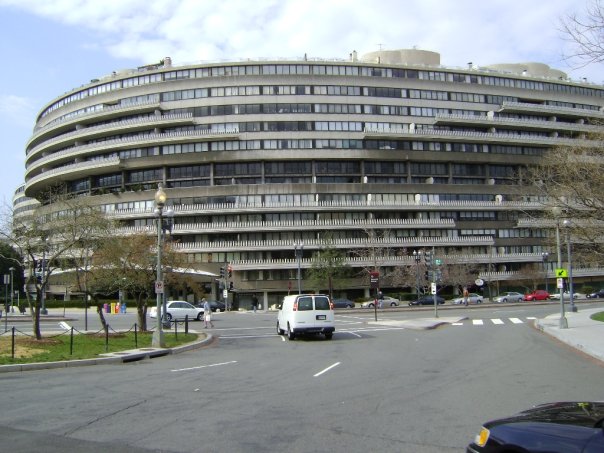
The thing they always say about Watergate is that it wasn’t the crime that destroyed so many careers but the cover up.

I mean, the crime didn’t help obviously, but the sense of wrongdoing was exacerbated by an unwillingness to accept fault and that unwillingness cemented the notion of guilt deep into the mind of the general public.

And after that there was no way back to respectability for the main actors involved.

Obviously nobody would argue the way the Vancouver Whitecaps played those two games against the Seattle Sounders was an actual “crime” (although if  a political party ran with that as one of the main policy agendas I could be tempted to look at their overall platform with a forgiving eye) but what’s made those games an itch that just can’t be scratched is that everybody within the organization, from the coach on up, seems intent on insisting that it really wasn’t too bad.

Almost from the moment the final whistle sounded the official line has been that Vancouver did very well to be where they were and were actually (if you squint a bit, tilt your head to one side and then press your fingers against your temples really hard) quite close to getting a result.

We all saw the games.

They were nowhere near getting a result (although I guess a loss is a result of sorts?)

So one can only asssume that this constant insistence on how splendidly it all went is due to one of two things.

Either it’s an attempt to soft soap those in the local media who don’t really take an interest in the Whitecaps while at the same time supposedly pulling the wool over the eyes of the more casual fans in the hope they can be persuaded that all is well.

Or it’s because the people at the club who really matter, from the coach on up, genuinely believe those performances were acceptable.

If it’s the former then they are fooling nobody who matters to the success of the team and are simply adding to the vague cloud of mistrust that occasionally puffs up from their Gastown offices like an inept mockery of the nearby tourist attraction.

If it’s the latter then heaven help us all because there’s nowhere to go next year but along the same bland and featureless plateau of tolerable competence and intolerable timidity.

The Vancouver Whitecaps were genuinely awful against Seattle and the fact that nobody of note within the organization is willing or able to speak that seemingly unspeakable truth will taint the vision and cloud the minds of supporters for so much longer than ever needed to be the case.


Vancouver Whitecaps Season Review (The Attack)

It’s tempting to make jokes about the phrase “Vancouver Whitecaps Attack” being an oxymoron like “Charlton Athletic” or “Translink Schedule” but there was at least some attack out there some of the time.

Mostly when the opposition allowed it to be by playing open football but it was definitely there because we all saw it.

So how did the players who comprised that attack fare this year?

Fredy Montero- All signs point to Montero not being back with the Whitecaps next season, which is a shame because Carl Robinson finally found somebody who could prosper in his lifelong quest to prove John Donne wrong.

Maybe “prosper” is overstating it but Montero produced his best ever goal tally in MLS and displayed enough on field savvy to make his isolation not quite the optimism killer it was for those who went before him.

We’ll probably always wonder how much better the team would have been if Montero had been granted more support more of the time but the Whitecaps would likely have been much closer to the basement of the table without his presence.

Good luck replacing him with a cheaper option!

Season rating- 7

Yordy Reyna- There’s a school of thought that can’t help but wonder how the Whitecaps would have fared had Reyna been fit all season.

“About the same” is probably the right answer although maybe the Peruvian would have developed a little more understanding with his teammates given the extra time.

When he was finally fit Reyna showed he had both the devilment and desire to make Vancouver just a little bit unpredictable.

But his end of season form was an indication that opponents had figured out that deploying men to mark Reyna out of the game was enough to extinguish the Whitecaps attacking threat.

Like Montero he’ll need far more support if he really is going to be the “difference maker” he’s advertised as.

Season rating-6.5

Erik Hurtado- What can we say about Hurtado? He’s a player who works hard, has power and pace and even improved his all round game in 2017.

But for all that the fact he featured as often as he did in 2017 is an indication of just how bare the Whitecaps attacking bones were.

Hurtado’s work rate and attitude alone mean he deserves some success in his career but if he’s still an option off the bench for Vancouver in 2018 something has gone horribly wrong with the offseason recruitment.

(Narrator’s voice: “Something went horribly wrong with the offseason recruitment”).

Season rating- 6

Nicolas Mezquida- Mezquida isn’t a great player by any stretch of the imagination but he’s a more than capable replacement for either a forward or number ten if needed.

But the reason he seems to be so popular with the fan base is because he plays the game in the exact same way we all imagine we would if given the chance.

He always gives everything, is overjoyed when the team win and devastated when they lose.

Mezquida is like the Spirit Animal of the supporters’ Id; desperately straining at the leash to express himself despite the limitations imposed by the team’s style of play.

Season rating- 6


Vancouver Whitecaps Season Review: The Midfield (Part Two)

There are some couples who only manage to stay together because they are constantly “doing something”.

Renovating the kitchen, building a new deck or turning that small space at the back of the house into an “office slash craft room”.

Because as long as they’re “doing something” they never have to stop and think about the mind-numbing pointlessness of their everyday existence. Never have to question the very fabric of their relationship.

Although I wonder what fabric one would use for the throw cushions in an “office slash craft room”? Why not take a chance and choose a Japanese print from Etsuko Furuya’s Echino line?

It’s bold, but no so bold that it overpowers the space entirely.

Anyway, the early indications are that the Vancouver Whitecaps are very definitely going to be “doing something” when it comes to player movements this off-season, probably in the hope that both they and us will be distracted from the crushing inevitability of another season in which not being able to fault the effort of the players is a high point.

So before a whole bunch of them depart on their merry way let’s begin part the second of our look back at the midfield class of 2017.

Christian Bolaños- Bolaños is the most cultured player in the Whitecaps squad (possibly by some distance) and he’s the only one who looks genuinely comfortable on the ball at all times.

But this season his influence and attitude was a notch down from his impressive debut year.

Put that down to the distractions of World Cup qualifying, a series of injuries or just not fitting into the system the team is playing but whatever the reason if Carl Robinson decides to bring Bolaños back it has to be with an idea of how he will be played in a far more effective role.

It’s telling however that for all the negativity Bolaños was still joint leader on the team in assists for 2017.

Season rating- 5.5

Cristian Techera- The other team leader in assists Techera very much had a bounce back year in 2017.

His set-piece delivery was a crucial factor and he was the only player consistently able to provide quality service to Fredy Montero from open play.

Techera’s form dropped at the tail end of the season but a positive year for him all things considered.

Season rating-6.5

Brek Shea- Shea is about as one-dimensional a footballer as it’s possible to be. He runs hard in the direction he’s facing and offers no nuance or intelligence in his game at all.

On the positive side he proved to be quite a useful substitute during road games, but the impression that he loves what he gets from the game rather than the game itself still lingers.

It’s hard to imagine he will be back in 2018 given his contribution and his salary and his final outing as a bizarre substitute at left-back in Seattle was a fitting tribute to a player who never once looked like finding a permanent role in the team.

Season rating- 4

Bernie Ibini- Ibini’s season felt a lot like Shea’s but with a far more positive spin. An effective substitute who did at least look like he knew what he was doing when he came onto the field and even offered glimpses of quality.

Yet he still lacked the ability to make an impact on a regular basis and “a useful player to have in the squad” might be the best thing we can say about him.

Every squad needs that kind of player of course so perhaps that faint praise isn’t the damning it first appears to be, but the overall impression of Ibini is that he would have been a good signing for an MLS team in 2014 but fortunately/unforunately the league has moved on since then.

Season rating-5 

Alphonso Davies- Maybe now that Davies has turned seventeen he will begin to be analyzed as a footballer rather than simply as a young phenom? Seventeen isn’t that young to be playing professional soccer and next season will be a huge one for Davies in terms of how he grows as a player.

Right now his pace and power cover up his less than perfect first touch and his somewhat perplexing inability to fully slot into the pattern of the team.

Those failings aren’t helped by the sense of expectation that greets his arrival in any game at BC Place and it would be nice if the club toned down the whole “we want to protect Davies while simultaneously mentioning him at every opportunity” vibe.

The best thing next year would be for Davies to be treated like every other player on the squad and incessant media narrative be damned.

Season rating- 5.5 

Nosa Igiebor- We haven’t seen enough of Nosa to make a definitive decision about his qualities but we have seen enough to know that he arrived being touted as a box to box midfielder before being played in a far more defensive role.

His pedigree is undoubtedly good but let’s hope he doesn’t turn out to be yet another attacking threat immolated on the bonfire of Carl Robinson’s defensive vanities.

Season rating-5.5


Vancouver Whitecaps Season Review: The Defence

In another timeline I don’t get to write up the season review of the Vancouver Whitecaps until early December, but these particular versions of ourselves have ended up in this God forsaken temporal cul-de-sac so this is what we get.

Don’t forget though that you can apply for timeline reassignment by sending Form T4867(a) to the Trans Temporal Authority during the month of December (memo to self: make sure this particular timeline has acquired knowledge of Temporal Jumping before publishing this).

So let’s take a look at how the Whitecaps defenders have performed this year.

David Ousted- Maybe some people would have guessed that Ousted would be out of the club at the end of the season given his contract status but very few would have predicted that his ousting (pun intended) would come before the season end.

The signing of Stefan Marinovic gave Carl Robinson the opportunity to replace Ousted, but what made that opportunity genuinely credible was the fact that mistakes were creeping into Ousted’s game.

Not huge blunders, but enough to justify a switch.

In the end it made no difference and Ousted can leave the team (assuming he does leave) with his head held high.

He was a player who always cared, always wanted to win and who could speak about games in a manner the supporters could relate to.

Season rating-6

Stefan Marinovic- We haven’t seen enough of Marinovic’s body of work to make any genuine assessment of how he will be next year but what we have seen is reassuring.

He was at fault for at least one goal in Portland but apart from that one blemish he has played with confidence.

Less combustible than Ousted he should instill a calm authority to the back line in 2018.

Season rating-6

Sheanon Williams- During the opening spell of the season Williams seemed to be exactly what the Whitecaps were missing from last year.

A steady, experienced right back who could often get forward to augment the attack.

He also appeared to be a positive locker room presence who was genuinely excited by the challenge of playing for a new club.

Then in June an alleged domestic incident led to Williams being suspended and assessed by MLS’ Substance Abuse and Behavioral Health Program and, from a playing point of view, it was effectively the end of his season.

His occasional start after that revealed a player who was either physically or mentally no longer capable of being “in the game”.

A sad state of affairs for so many reasons.

Season rating-4

Jake Nerwinski- Nerwinski arrived as a promising backup to Williams and ended the season as one of the first names on the team sheet.

It was the very definition of a player making the most of his opportunities.

There were even games where Nerwinski seemed to be the Whitecaps most potent attacking threat thanks to his boundless energy traversing up and down the right side of the field and a total of five assists from the right back posiiton is no mean feat at all.

The one area of concern is that both Portland and Seattle targeted him with some success in recent games  and he’ll need to learn how to deal with that kind of pressure as his career progresses.

But he’s shown that he is a smart enough player to take those lessons on board and his play was one of the genuine bright spots of the season.

Season rating-6.5

Jordan Harvey- Maybe some people would have guessed that Harvey would be out of the club at the end of the season given his contract status but very few would have predicted that his ousting (not even a pun) would come before the season end.

Marcel de Jong’s Gold Cup gave Carl Robinson the opportunity to replace Harvey at the business end of the season, but what made that opportunity genuinely credible was the fact that mistakes were creeping into Harvey’s game.

Not huge blunders, but enough to justify a switch.

In the end it made no difference and Harvey can leave the team (assuming he does leave) with his head held high.

He was a player who always cared, always wanted to win and who could speak about games in a manner the supporters could relate to.

Season rating-5.5

Marcel de Jong- The Canadian was given the chance to earn a starting spot in the late summer and he grabbed itwith both feet.

He offered more going forward than Harvey, was defensively solid and was also one of the few on the Vancouver back line who was genuinely capable of playing passes of consistent quality.

Throw in a decent shot and set-piece delivery and de Jong has placed himself at number one for the number three role in 2018.

Season Rating-6

Kendall Waston- There were some (including me) who thought the club would be better off trading on Waston’s reputation in the off season in the hope of getting a decent return for a player who had been somewhat of a liability in 2016 given his predilection for red cards and overreaction.

But whether it was the captaincy, a different way of playing or simply Waston taking stock of where he had gone wrong he was a vital presence in 2017.

His threat from attacking set-pieces obviously helped his cause but, far more importantly, he was once again defending as a defender rather than as a player who wants to be noticed.

His heroics with Costa Rica in World Cup qualifying may alert the attention of bigger clubs around the world but Waston is ideally suited to MLS; big and strong but limited in his passing range

If he chooses to stay in Vancouver for the rest of his career he could become one of the clubs iconic players.

Let’s hope that’s the path he chooses.

Season rating-7  

Tim Parker- It says a lot that Tim Parker had perhaps his least consistent year for the Whitecaps since he arrived here and yet was still in no danger of losing his starting spot.

Not that Parker was terrible. It was just the odd moment where he seemed to switch off or find himself out of position.

And while Waston’s passing can be described as “limited” Parker’s is “unlimited” in that the ball really could go anywhere.

If he could figure that out (or be played in a system that doesn’t rely on him to hit the pass that starts attacks) he would be one of the best central defenders in the league.

Season rating-6 

Next time out it’s the midfield (and there’s a lot of them!)